
Blake Ian Dives Into The Music That Made Him
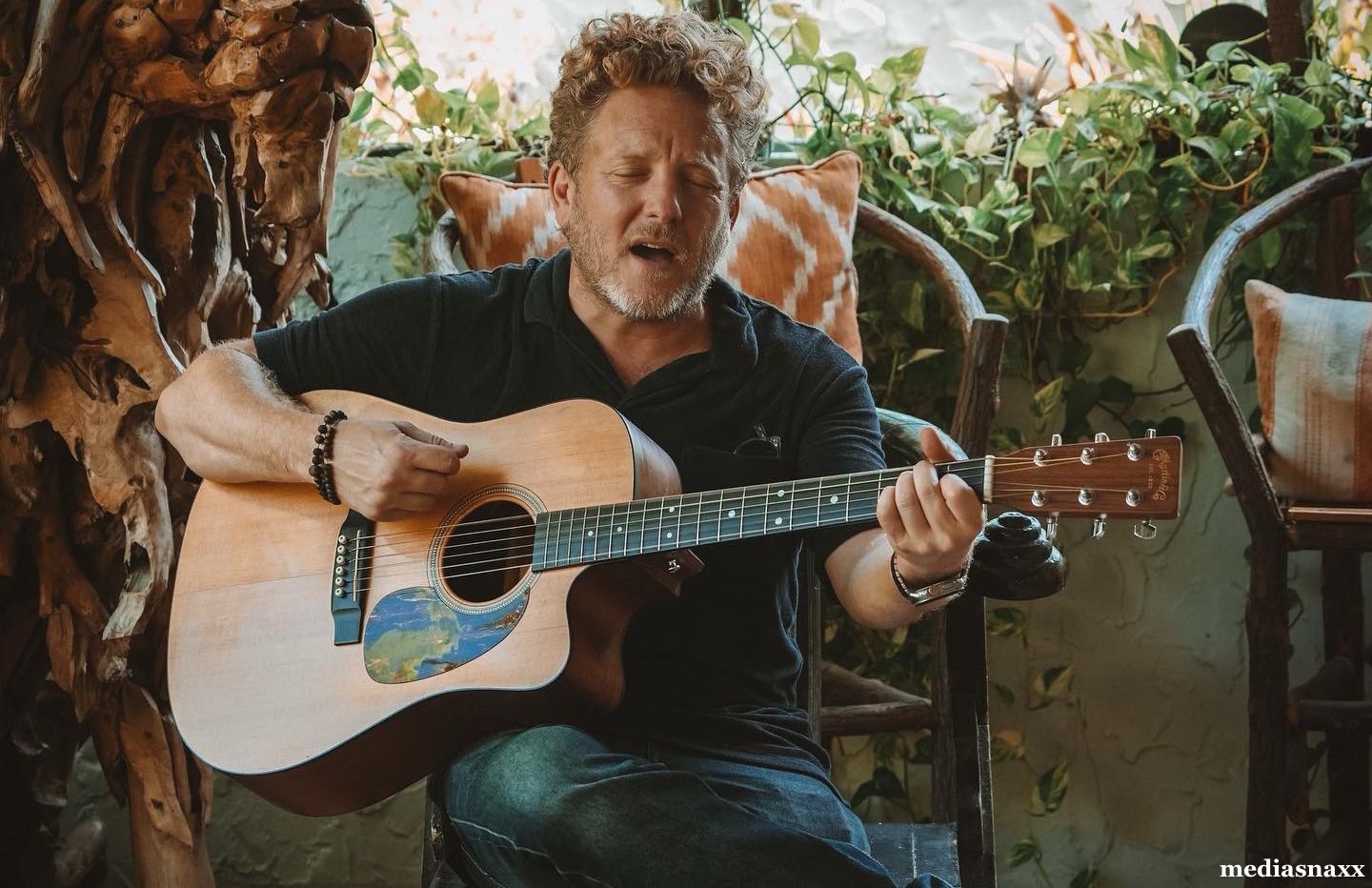
When Blake Ian and a few of his friends came together in the studio one day to record a couple of cover songs for fun he never imagined it was going to turn into the most all-encompassing project of his career.
“The first few I did with some friends in New York that I worked with for a long time just came out so good, I was so happy with how they came out, I was like, let’s do more.”
At first, “more” was going to be the ten songs he felt most defined him as a songwriter, but as he kept digging, and as he kept recalling the music that influenced him over the course of his life and nearly three-decade-long career, he says, “Ten grew into 80.”
Ian, an NYC native who now lives in Florida, decided to record all of them, and has compiled his versions of these songs, which include classics and album cuts from everyone from Bruce Springsteen, and Bob Dylan, to Nirvana, Radiohead, and Mazzy Star, in a ten album project titled Under The Influence. He’ll be releasing one album from the project every four weeks via his own independent label, 27 Productions.
“I was gonna put it out in four volumes,” he says, “and I was like, even 20 songs a volume is just too much, people are not going to hear it. So then breaking them into artist-focused albums became the idea, and that’s where it landed.”
The other idea was that he wasn’t going to simply cover the songs, he was going to do something unique with each of them.
“‘Paranoid Android’ by Radiohead, to me, is the most epic, complex song, and one of the most beautiful rock songs ever, so it was like, I’m going to do this acoustic, and sing it. That, to me, was like, OK, that’s worthwhile. That’s interesting for people to hear. I don’t want to do something that sounds like trying to do what the original did.”
There was only one artist’s music he didn’t really alter, noting, “The big exception was Dylan.” For Dylan, who is the only artist Ian dedicated an entire album to, he says, “It’s me singing, not him, and it’s me playing, and I play different rhythms, but that’s the only one that came close to recreating the sound.”
The Dylan album, titled Don’t Think Twice as well as a short documentary of the same name, were the first releases from Under The Influence, coming out this past week, and kicking off what will be a wildly eventful year for Ian. I caught up with him to find out more about the project, the incredible story that led to the completion of the documentary, and if there were any songs he deemed untouchable.
One thing I’ve noticed about your career is you like to release music in unique ways. You had a single release show at Peter Tunney’s art gallery in NYC, and you had limited edition vinyl for “Play The King” with artwork by Peter Tunney. Now you’re releasing an album of covers every four weeks for the next year. Before we get to the music, what inspires your originality in how you bring your music to the world?
My initial answer that comes to mind is that it might just be a byproduct, or an unintentional result, of doing the things that I feel like doing.
Releasing an album every four weeks for a year is just because I wanted to do some covers. Then it grew and grew, and I was like, oh, let me do this massive project.
The vinyl was me and Peter talking, and that specifically was those songs, “Play the King,” and a B-side called “Somewhere (at 150).” Those had a very Sun Sessions tribute vibe, production-wise. Because it had that sound, it was like, this makes sense to do a two-sided seven-inch, and Peter and I were talking about doing something together at that time.
Doing the party at his place is just, you know, if you have the ability to do a record release at Peter Tunney’s gallery in New York City, then you do one. I think I performed standing on the desk that night. (editor’s note: he did)
It kind of just seems like the result of whatever I’m doing in the moment. I don’t know if I can claim specific intention.
It sounds like you exist in other universes, and allow that to be incorporated into your music life.
Yeah, I think in general I definitely live in different universes.
In music specifically, I remember being like 13 and listening to bands I love, and having a question of wondering – and as I’ve learned, it has to do with marketing and all sorts of things I haven’t really adhered to – why doesn’t this band just come out and do something totally different, and reinvent themselves?
Some people do. Beck does that really well. Bowie did that. Dylan, to a certain respect, has done that, but most artists don’t, and I always felt like that would be a goal, to keep doing new things, to reinvent.
I think that’s how I ended up living in different universes, because it’s more just like, what do I feel like doing right now, rather than having some sort of continuity of a career, or a body of work.
You just kicked off what will be a ten album run of covers with an album that’s solely the music of Bob Dylan, titled Don’t Think Twice, as well as an accompanying short documentary. Out of all the covers you recorded, what was it about Dylan’s songs that made you want to have an extra special focus on them this way, and have him bat leadoff?
It was a question, because in chronological order, it was pulling me to say, you’re supposed to do the Nirvana record first. They’re the reason I picked up a guitar. The thing that Kurt Cobain did, and how it felt to listen to it when I was 12, 13 years old, that lit me up to say that’s what I want to do, I want to express raw emotion in song.
But Dylan, Dylan is just, bar none, my biggest influence, so I think I went with biggest influence over chronological influence. He’s been my textbook, and so he’s the only artist that got his own album, not a mix between several artists.
The documentary was a separate thing. It was coming about even before I started this project. As the documentary got finished, it just seemed like a really nice way to release a year-long project. It’s about the influences on me of other musicians. There’s a story of my uncle giving me his records when I was 14 and introducing me to all these artists that became influences. Obviously, that doesn’t include Nirvana, and more modern people, but Dylan, and Neil Young, and those kinds of guys.
So the documentary is the story of influence, my uncle’s influence on my music, and these artists’ influences on my music, so it just seemed like the right way to launch Under the Influence.
In our email exchange, I mentioned the wild coincidences that I’m currently reading a book about Dylan, and that I just published a column on why I like covers as singles. You noted there was also quite a bit of synchronicity when you were putting this gigantic project together. What was going on? Was the universe at work here?
The universe is constantly at work.
One specific story I’ll tell you, which is not in the documentary, happened after we shot it.
I was looking for an editor for about a year. I worked with two or three different editors, and it just wasn't working out. I even started to question, maybe this story doesn’t need to be told. I was really at that point.
I went to a Springsteen show by myself, sort of a time spent with my uncle, who had passed, because he had been traveling with Springsteen since like the early ‘70s. Dylan to me was like Springsteen to my uncle.
I ended up in a place called The Vault at Hard Rock Stadium (in Miami), where it was the nicest VIP section. I ended up there for $40 because I was looking at StubHub, and I just landed there, and it was just like this amazing thing.
I had the greatest time ever, and then the next night I was at my mentor’s cigar lounge, and a woman knocked on the door, and I said, “Hey, can I help you?” She’s like, “A guy named Brian told me to come down here to see you, to meet you.” I was like, “How do you know Brian?” She said, “I don’t really know Brian. I just saw him in a restaurant. He said you’re down here with some friends, and I should come check it out.”
We start talking, and I started talking about the documentary. She says, “My daughter is an editor.” I said, “I’m looking for an editor. Has she ever worked in music?” She said, “Yeah, she only works in music. She edits music documentaries.” I was like, “What? OK, well, obviously your daughter’s meant to be my editor.”
So I said, “Do me a favor, text her right now, tell her to follow me on Instagram, and message me. She’s probably going to be my editor.”
She looks down at her phone two minutes later, and her daughter texts her. She looked up, and said, “Were you at a Bruce Springsteen concert last night? My daughter said, ‘This man looks familiar. I think I saw him at a Bruce Springsteen concert last night.’”
There’s like 30,000 people at the Bruce Springsteen concert. I said, “Was your daughter in The Vault section?”
She asked her, and she goes, “Yeah, she wasn’t even supposed to go. Her friend’s father was taking the daughter and the mother, the mother got sick, so they asked her.”
She was sitting next to me in The Vault, and remembered smiling at me, and remembered looking at me.
She was totally the person that was supposed to edit (the documentary). You can’t even explain the odds.
While she’s editing, she’s listening to me tell a story on stage about my uncle, and my uncle happened to be sitting next to the person shooting this video of me telling the story at a show, and she’s like, “Blake, I’m watching the scene, and I go into my phone at that time, and I see my camera roll …” She had taken a picture of the whole stadium, the whole audience, and the whole place is just seated, and I’m the only person standing. She looked, and she’s like, “Oh my God, that’s Blake in the picture on my phone.”
My favorite book is The Alchemist. You’ve used the word universe a couple times, and it’s how I refer to the higher power. There’s a line about when the universe conspires to make it happen. That’s what it felt like. That story just blew my mind.
There are so many levels to that story.
Yeah. It sounds made up. If you saw it in a movie, you’d be like, it’s too unrealistic. You wouldn’t believe it.
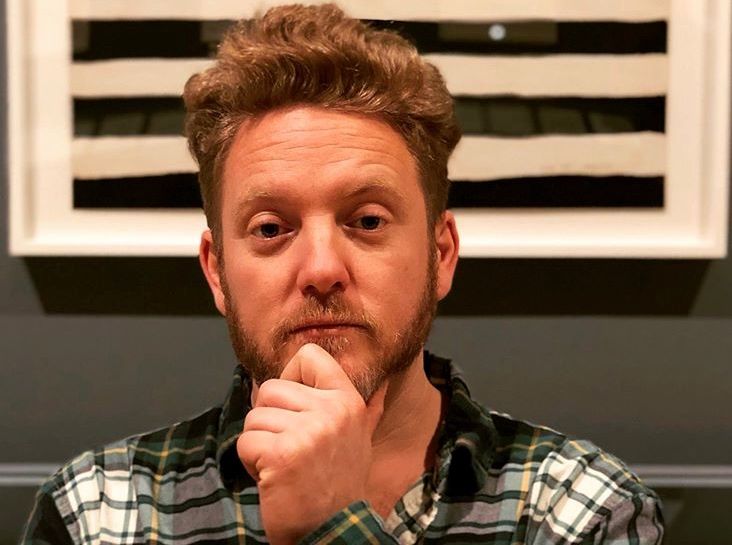
Following Don't Think Twice is going to be Lithium, on November 27th, and then eight more albums after that. The influences you’re covering are really wide ranging. There’s Springsteen, and Nirvana, but there’s also Mazzy Star, Madonna, The Doors, and Marcy Playground, among others. Did you group the influences in specific ways for each album to try to have some continuity?
I did.
I used to love the order of songs of a record, and how someone experiences it, and the order of albums.
When you say Madonna, it’s funny, because how is she an influence of mine? I really wanted to go through my whole life, and growing up in the early ‘80s, that’s what was on the radio.
I didn’t do a Michael Jackson song. I tried one, and I didn’t like the way it came out, so it’s in the outtakes.
But Madonna represents me at five years old hearing music for the first time that made me dance, or excited, or happy.
Mazzy Star in the ‘90s, I mean, (“Fade Into You”) is just one of the most beautiful songs ever written. I even questioned doing it just because it’s so on the nose, but I liked the way that I did a demo, and I think I actually just put the demo on there as the final.
Were there any songs that you felt were untouchable, that you just weren’t going to work with?
Yeah. I was trying to figure out what Beatles, or John Lennon song I would do, because it would be really hard to leave him out, although I wouldn’t list them among my top ten influences.
It’s like, I’m not going to cover “Imagine,” although I did it for fun with my niece, she has a beautiful voice.
“Blackbird” is something that I love to play sitting on the couch. It’s a little bit of a guitar mission to learn “Blackbird,” it’s like a bucket list item to be able to play, and sing it.
I guess I felt like I wasn’t adding anything, or coming at it with a new angle, or perspective. It just felt like, I’m just doing it not as well as the original. I’m just doing a lesser copy.
With these influences spanning your entire life, when you were working with these songs, and breaking them down, and recording them in your own way, did that process bring you back to when you initially discovered the music?
Oh, yeah. Totally. Especially when I didn’t think of doing a song, and then it occurred to me, like with Lithium.
I did “Lithium,” and an unreleased song called “Opinion” by Kurt Cobain, and “Something in the Way,” and I was kind of done with Nirvana.
Then it struck me that “Pennyroyal Tea” was my favorite Nirvana song when I was a kid. I mean, I wrote the lyrics on my wall with a Sharpie. I loved that song so much. I was like, how did I not do “Pennyroyal Tea”?
Not only did it remind me to do that song, but while I was recording it … I’d forgotten how much I love that song, so I got really into it.
Rediscovering those songs, how they resonate, and then also figuring out what the person’s doing … When you dissect songs, you learn what people are doing, and then you’re like, oh, they’re doing that with these chords, and it can seep into your songwriting. That’s how I started.
When people say, “I want to learn how to play guitar,” I just say, my first step – learn a few chords, and then just learn songs that you love. Then it’ll occur to you what Neil Young does with little riffs in-between chords, what Bowie does using eight different chords in a phrase.
I’ve obviously done that for years, but to do it with 80 songs, I would say 70 of them I’d never played before … there was that element, too.
I know you’re also very much into meditation. With that in mind, when you lay out a release schedule like the one you’re about to embark on, how do you go about making sure you won’t get overwhelmed?
I work on my mental health a lot.
I like to talk a lot out loud, in case somebody needs to hear it, about my journey with mental health. If we’re into diagnosis, my diagnosis would be generalized anxiety disorder, and I’ve been navigating that. I talk about that in the documentary. I talk about that as much as possible, because I think talking about it is the biggest cure for it being out there.
I’ve developed a lot of tools that came out of necessity, and have now served me in not only keeping me from being overwhelmed, but are also a source of creativity.
I smoked a lot of pot when I was a teenager. That was my vice of choice through my 20s. It definitely was a part of a process of being creative. Transcendental meditation has completely replaced that.
I haven’t smoked in 15 years, other than here and there at a party, and I get that same inspiration when I meditate for 20 minutes.
During the meditation, it’s bubbling up, and then after, I can really create. It organizes my thoughts a lot, and it definitely keeps my nervous system at a more relaxed state, so I’m not overwhelmed.
There’s also the fact that I’m a technologist, aside from being a musician, so I build in AI a lot. I have an entire system, and I don’t think I could have done this project had I not been building this system. 82 songs, keeping track of whose part I need, which ones are mixed, demoed, recorded, mastered, what needs artwork. It’s handling the distribution, and the ads, and the marketing.
So I think using technology for organization is one way to stay not overwhelmed, and then meditation, just keeping the nervous system in check.
Those meditations are key for inspiration, and overwhelm.
For more Blake Ian, check out blakeian.com.
Comments