
One Hit Wondering – Las Ketchup

One Hit Wondering is a series of columns where I listen to the album of a one hit wonder, and find three songs, other than the hit, that people should hear.
In the summer of 2002 three sisters from Spain took the world by storm with a nonsensically named tune that came paired with a novelty dance. I am, of course, talking about Las Ketchup, and their smash hit “The Ketchup Song (Aserejé).”
Practically overnight, Lucía, Lola, and Pilar Muñoz were being heard literally everywhere, as “The Ketchup Song (Aserejé)” hit #1 in nearly every country where it was released. Reaching the top spot in 23 countries, and only missing it in Croatia (peaked at #10), Japan (#15), and America (#54), the song sold seven million copies worldwide, and had countless people doing the dance associated with it.
Was it, however, the work of Satan?
Get ready for a ride!
Las Ketchup were born from a musical legacy, being the daughters of flamenco musician Juan Manuel Muñoz Expósito. Their father’s stage name was El Tomate, which is Spanish for “The Tomato,” making the group’s name, Las Ketchup, a tribute to their dad.
The trio were discovered by flamenco record producer Manuel “Queco” Ruiz, who had a long history of his own.
Kicking off his career as an artist in 1982, Queco recorded four albums until a serious auto accident in 1990 caused him to pause that part of his life. At that point he shifted his focus to writing, composing, and producing, and a little over a decade later, in 2001/2002, he founded an indie label, Shaketown Music, with fellow artist Manuel Illán.
After an initial meeting with Las Ketchup – which Queco told El Pais took place in a bar, and saw the ladies arrive with a notebook full of lyrics – he quickly signed them.
The ladies recorded a demo that included “Aserejé,” which was written by Queco, and Shaketown began shopping it to major labels.
Columbia Records, notably A&R Javier Portugués and director Raúl López, had their eye on the trio, and while they originally wanted to work out a distribution deal, after hearing the demo they negotiated to have Las Ketchup join the Sony roster.
In June of 2002 “The Ketchup Song (Aserejé)” was released, with a Spanglish version having been made for a number of non-Spanish speaking countries. The song sparked joy, dancing, and one of the most bizarre incidents of Satanic panic in music history.
Translated, the song is about a young man named Diego who enters a nightclub having already enjoyed himself quite a bit during the evening. Intoxicated, he walks up to his friend, who is DJing, and attempts to ask him to play “Rapper’s Delight” by The Sugarhill Gang at midnight. The only problem is he’s so wasted he can’t remember the name of the song, or the lyrics, so he begins rapping the initial bars of the song in gibberish. The first word he attempts winds up coming out as “Aserejé,” which is totally meaningless … unless you were overly concerned parents who was more out of their minds than Diego appeared to be.
Because apparently there’s a Tipper Gore in every country, conspiracy theories started spreading that the nonsense word “Aserejé,” and other parts of the song, were actually demonic references, and attempts to lead kids into Satanism.
I’m not making this up. This was something people actually thought.

According to these folks, “Aserejé” had a hidden message, and when broken down into “a ser herejes” it meant “to become heretics.”
Among other things, they also believed that Diego requesting his favorite song to be played at midnight was a specific reference to Satanic rituals that occur at that hour.
I, for one, would be a little less concerned about the song’s lyrics, and a little more concerned about the parents’ apparent intimacies with inner-workings of Satanism.
The parents, however, proved to be convincing enough to a number of people, as “The Ketchup Song (Aserejé)” was banned throughout Honduras, and by a Mexican radio station. A TV station in the Dominican Republic, and one in Mexico, temporarily banned or restricted the song, and both the song and the dance were banned in schools, and public places in the Philippines.
As all of this was going on, Las Ketchup released their debut album, Hijas del Tomate, which translates to Daughters of the Tomato, on July 30th, 2002.
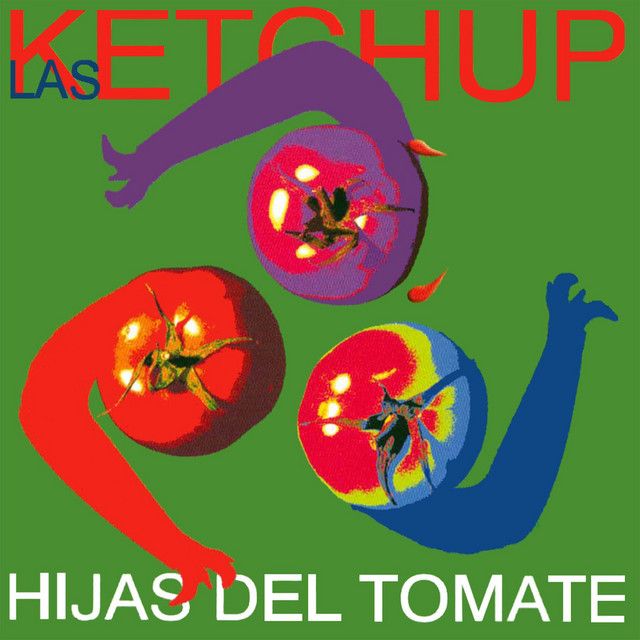
The Satanic panic, and attempt to ban the song, had zero impact on sales, or honors, as the album sold over two million copies worldwide, and would be nominated for a Latin Grammy Award in 2003 for Best Pop Album by a Duo or Group with Vocals.
There are conflicting reports regarding whether or not The Sugarhill Gang ever took legal action against Las Ketchup, with one website, Mitu, claiming they did, but lost, while LadBible claims Las Ketchup was never sued over it.
Whether there was any legal action, or not, having such a huge hit turned out to be far more exhausting than exhilarating for the trio.
The label, seeing dollar signs, wanted to get everything they possibly could from “The Ketchup Song (Aserejé),” and for the ladies that meant an itinerary of relentless touring, and appearances.
Enjoyment wasn’t anywhere on the schedule, but burnout was certainly on the way.
The second single from Hijas del Tomate, “Kusha Las Payas,” had no chance of recreating the success of its predecessor, and faded quickly (although for some reason it was beloved in Romania. Go figure).
For the holidays, Las Ketchup re-released “The Ketchup Song (Aserejé)” as a Christmas song, which really just involved adding some jingle bells, and a xylophone, but hey, it works.
Perhaps inspired by the success of Las Ketchup, in 2003, without leaving his roles as a producer, composer, and songwriter, Queco made a comeback, releasing an album titled Tengo.
Las Ketchup, meanwhile, were on the downswing from the success of their mega-hit. They added a fourth sister, Rocío, to the group, and weren’t heard from again until 2006, when they represented Spain in the Eurovision Song Contest. For the contest they debuted what would become the title track of their next album, “Un Blodymary.” Yes, the tomato theme was still going strong. Sadly, voters didn’t have a taste for it, and the now foursome wound up coming in 21st.
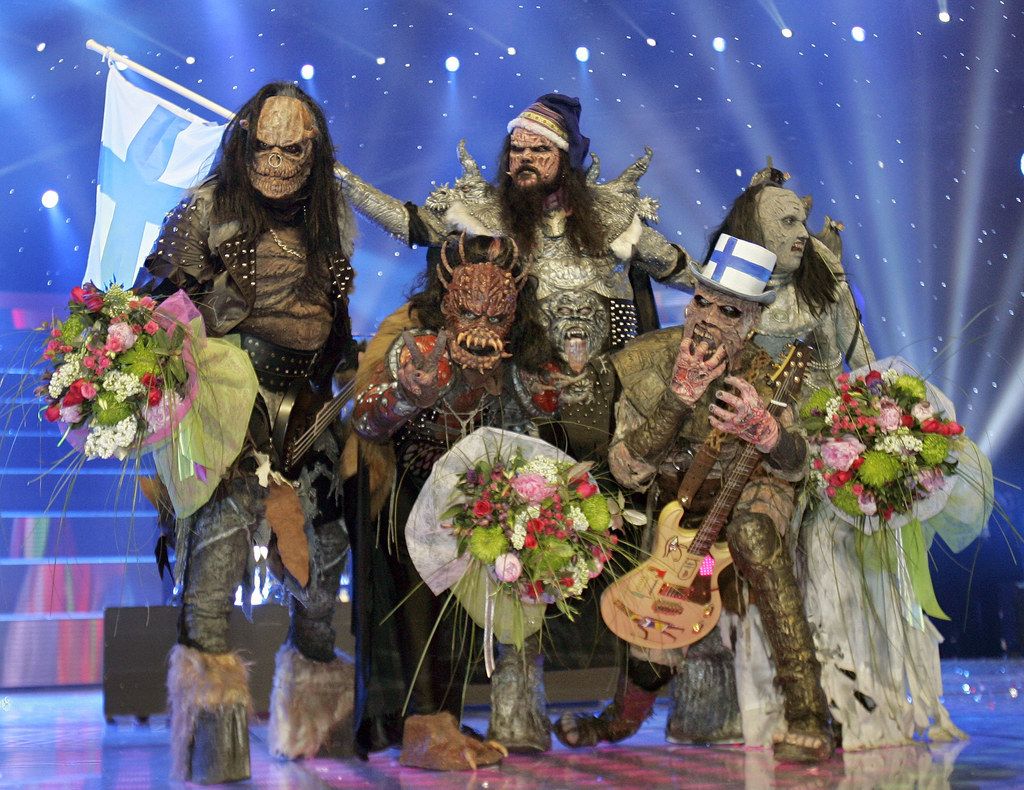
The winner that year was Finnish rock band Lordi, with “Hard Rock Hallelujah.” You gotta wonder what the parents were who terrified of Las Ketchup thought of that!
Un Blodymary was released in 2006, and in addition to now having Rocío in the fold, the girls also had their brother, flamenco guitarist Juan Manuel Muñoz González, on the album. He plays guitar on “Alegrías De Mi Tanga,” and he also did the illustrations for the album.
Lest anyone think the male offspring fell any further from the tomato plant, he’s also known as Juanma Tomate, and El Tomate Hijo (son of tomato).
According to his blog, he currently runs a dance academy named Tacón y Bordón Flamenco Dance and Guitar Academy, with his wife, María “La Chata.” His blog, however, hasn’t been updated in a decade, so that information may be out of date.
With Un Blodymary not generating a hit, and extensive touring having taken its toll on the ladies, Las Ketchup took what would turn out to be a decade-long break from music.
In 2016 they returned to perform at festivals, and on TV shows, but they still haven’t released any new music since 2006.
Sadly, their father, El Tomate passed away in 2025.
Rewinding back to when Las Ketchup had the entire wild dancing, and some insane parents thinking Satan was somehow involved, I gave Hijas del Tomate a spin, while simultaneously firing up some translation websites, and I found three songs, other than the hit, that you should hear.
For as bizarre as the charges of Satanism were, some of the actual lyrics were even wilder!
“Sevillanas Pink”
A huge musical deviation from “The Ketchup Song (Aserejé)”,” “Sevillanas Pink” features a beautiful flamenco guitar, and is about an equally beautiful girl … who is actually a boy.
Yes, “Sevillanas Pink” is an ode to Rosa, who they say is the prettiest girl in school, but it turns out Rosa is actually Pedro, a boy transitioning to being a girl!
As the translated lyrics state, “As a baby, her mother dressed her in crocheted panties / of course, without hesitation, always pink / and so my Rosa grew up without any repression / always with her toenails painted pink.”
There’s even a lyric about Pedro/Rosa taking hormones.
Talk about a progressive tune!
“Me Persigue Un Chulo”
Momentarily starting out as post-grunge, before morphing into a ska song, musically “Me Persigue Un Chulo” is a wonderfully bouncy tune, but you aren’t going to believe what it’s about.
“Me Persigue Un Chulo” translates to “I’m Being Chased by a Pimp!”
Based on the lyrics, the word “Pimp” is being used to describe an overly aggressive guy, who has large muscles, but is dumb as rocks. One lyric translates to “he opened his mouth and ruined everything.”
I’m guessing plenty of women can relate to that.
“Tengo Un Novio Tantriko”
“Tengo Un Novio Tantriko” is a fun tune that translates to “I Have a Tantric Boyfriend.” So if anyone was wondering what the ladies of Las Ketchup were looking for in 2002, it was something in the Sting department.
Come to think of it, I wonder if they ever bumped into Sting, whether in person, or tantrically!
Until next time, here’s to discovering more great music from one hit wonders!
If you liked this article, check out the book – One Hit Wondering: The Stories of 40 One Hit Wonders + Other Tales From The Crates. Available now!
Comments