
Love Jones – Forever Enjoying The Ride
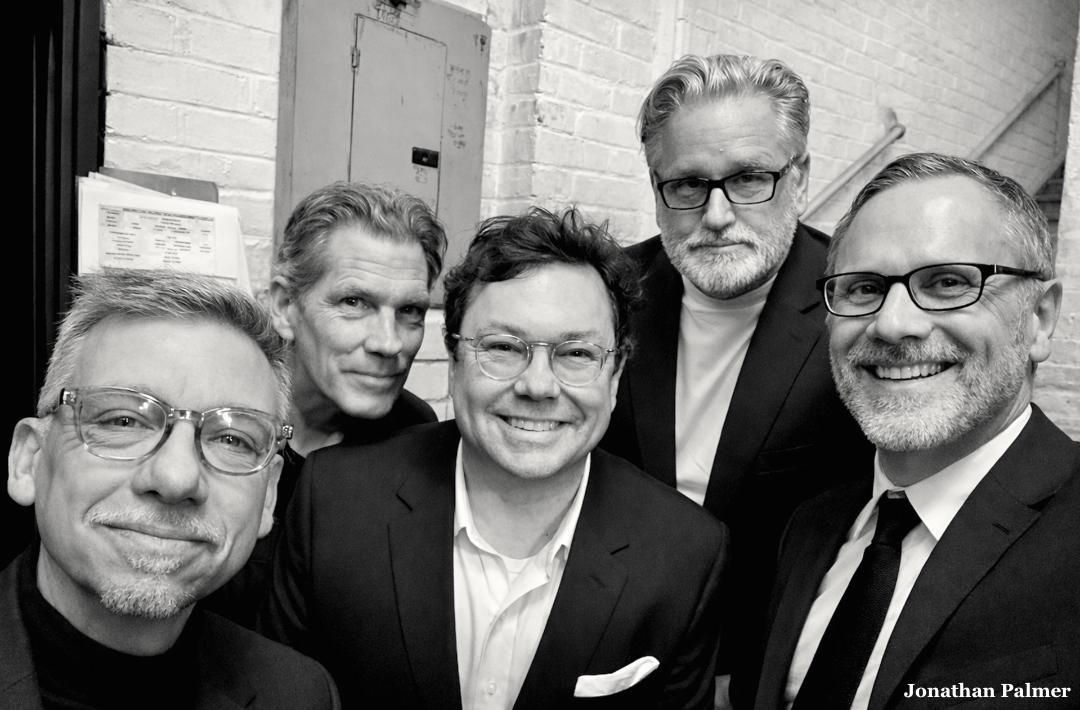
You never know where life is going to take you, just ask the fivesome of Love Jones.
The Los Angeles, by way of Kentucky, band – which consists of (photo L-R) Ben Daughtrey, Todd Johnson, Chris Hawpe, Barry Thomas, and Jonathan Palmer – has roots in numerous genres of rock, but formed while feeling a wave of nostalgia for the days of lounge bands.
They made a name for themselves in L.A’s early ‘90s lounge pop scene, and their song “Paid For Loving” became immortalized when it was used in the movie Swingers, which celebrates its 30th anniversary this year.
Love Jones, however, hasn’t stayed in one lane, and their latest album, The Greatest Show on Earth, shows how much they enjoy going in different directions with their music.
“It’s an expression of joy, and fun, the collaboration we have together,” Palmer explains, “If it entertains anybody else, great, we’ll take it.”
I caught up with both Jonathan Palmer and Ben Daughtrey, who discussed being part of the Swingers legacy, as well as the unusual set of circumstances surrounding the signing of their first record contract, and the complicated future of music nostalgia.
What was the lounge pop music scene in L.A. like at the dawn of Swingers? Was it really as cool, and fertile as the movie made it out to be?
Ben: Yeah, I think it was.
What was weird to us is we didn’t know we were part of any scene in particular. We were just doing what we were doing when we moved to L.A. We were kind of shocked to find out that other people were thinking about the same thing.
Jonathan: It was an interesting moment in L.A., because you’re coming, in the early ‘90s, out of the hair metal era, and it’s a little before L.A. had found its way into the indie music scene, and the alternative music scene, with artists like Beck, and Weezer breaking. So this is right between those two big, massively commercial moments in terms of identifiably L.A. music.
There were some scruffy little clubs that were doing retro cocktail hours, and we were a band that played into that a little bit. We had a standing gig at Largo, and people would come, and we’d play our lounge adjacent brand of music with a lot of smart-alecky banter in-between songs.
When we got signed to Zoo Entertainment in ’92, that was like a marketing peg for us, potentially, because there were other things happening around it. There were other clubs in town, a couple of other bands, and nationally there were some other bands like Combustible Edison, and in L.A., Big Bad Voodoo Daddy. Squirrel Nut Zippers in North Carolina.
None of us really fit together perfectly well, but we all had a yearning to be tied to something in the past, and evoke a more classic era of music.
I don’t think we were really so much reacting against what was going on in music contemporaneously, but we sort of thumbed our nose, just for fun, at grunge, and some of the current commercial forms at that particular moment in time.
Weren’t you punk rockers before this?
Ben: Yeah. I mean, I was in hardcore bands, and stuff.
To me, I wanted to play music that I’d been listening to outside of rock.
We bonded over our shared love of Latin jazz, and stuff like that, and we were all like – I wonder if we could play this kind of music?
We also love singing, so we were like, well, we can sing harmony, let’s do a band where we sing. Let’s be as far outside of what’s going on as possible right now.
I don’t know if it was conscious, or unconscious, but it definitely didn’t fit into anything that was happening.
I think that’s why we got so much attention at the time, because we did embrace sort of old school like, let’s wear matching suits and have short hair and go out and cut up on stage and have a blast, as opposed to navel gazing, shoe gazing, guitar oriented music.
How did a member of Tool become instrumental in you getting your first record deal?
Ben: They used to come to see our show at Largo because Largo was also a place for the new comedy scene, which it still is, and there were a lot of alternative comedy people there. We kind of fit into that because we do a lot of improv comedy on stage.
The guys from Tool started coming, and we hit it off.
Before we were signed, they asked us to play a show with them at the Church of Scientology Celebrity Center in Los Angeles.
Wait, what? Time out. How did that go?
Ben: Well, it was funny, because they thought they were going to be the controversial act.
They had hired a overweight stripper to come on stage (among other things). We were prepared to do what we normally do, which is talk shit on stage.
We got up there, it was a big crowded room …
Jonathan: And things were said.
Rather than get into the details, I would say that some things were said, and we were asked to leave.
We finished our set, but it was under duress, and then we were basically told to get off the property.
Ben: I wasn’t too worried about the property.
Jonathan: Tool had their set, and the fans were all riled up from our set by the time they came on. It went pretty sideways with their onstage antics.
It was supposed to be the first of a two night stand. The Scientology people canceled the second night of two sold out nights, and a legend was born.
Maynard (James Keenan) talks about it a lot in interviews. It was pretty funny.
We had people (there) from the label (Zoo Entertainment) who had been coming to see us at Largo, but that night I think they saw something in us. Whether it was just the guts to be that out there, or the fact that we connected – a band doing three part harmonies, and a mix of soul and doo-wop that went over really well with Tool fans – I think to them was like, oh, we can do something with this.
So we were offered a record deal in the parking lot by Lou Maglia, the head of the label.
You were offered the deal that night, in parking lot of the Church of Scientology Celebrity Center that you were just tossed out of?
Ben: Yeah. These guys (from the Church of Scientology) with German accents were like, “You don’t know what you’re messing with. We are very deeply connected to Hollywood, you know, and you have destroyed any chance you have.” I do think about that often.
But you did make it Hollywood, because you had Swingers, the 30th anniversary of which is coming up. So they could not have been more wrong.
Ben: Thank you, Adam.
Jonathan: Right. I mean, we never became a household name, but we definitely we got a record deal, we got in a cool movie, and we had some fun things happen along the way, so beat that.
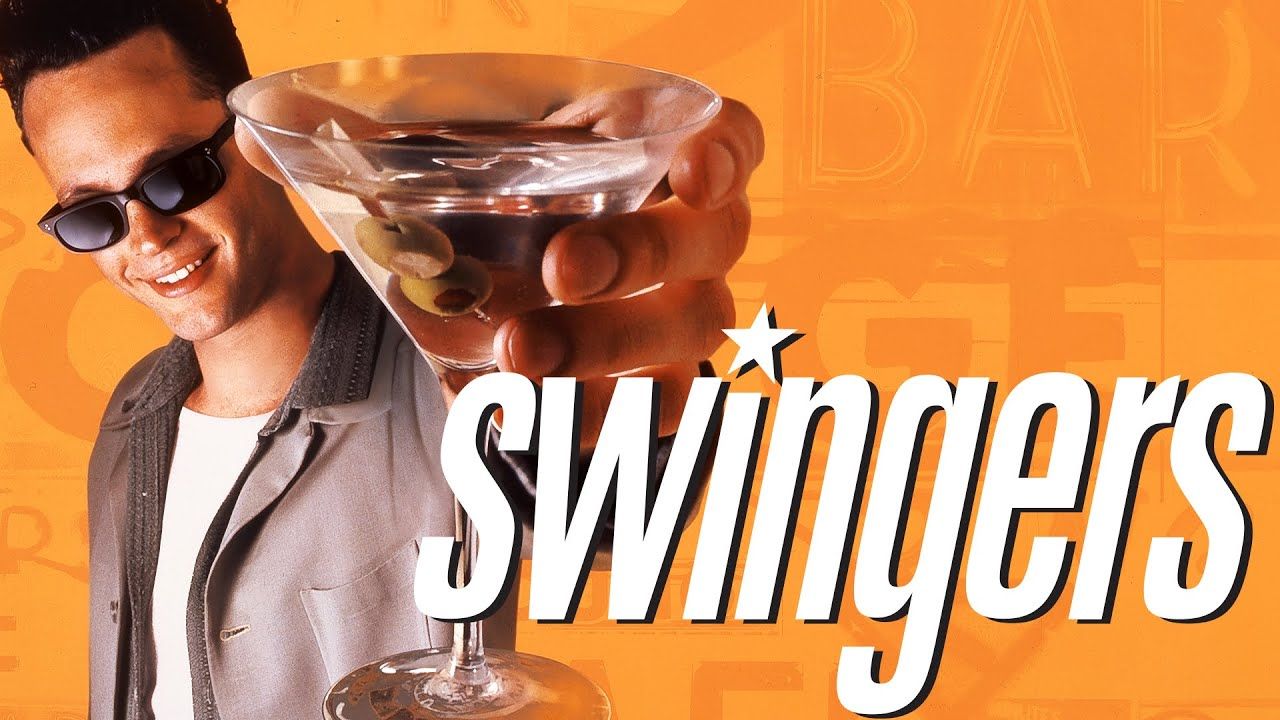
How did “Paid For Loving” end up in Swingers? I’ve read that you guys were friends with Vince Vaughn and Jon Favreau, but is that how everything came together?
Jonathan: We had a manager in common at the time. Our manager then was Brian Lutz, who also managed a lot of screenwriters and comedians, and he worked with Jon and Vince.
We had an early opportunity to read the script when they were looking for bands to put in the movie, and Ben has some memories of that.
Ben: I didn’t get it. I didn’t understand the irony in the script, and I threw it out the window of our tour bus. I was like, you know, I’m not into this.
Jonathan: We drove back. We don’t like to litter, for one thing.
Ben: Secondly, they approached us about being the band in the movie, and I was stupid enough to not recognize what was going on, and being so punk rock, I didn’t want to sell out for anything that I didn’t think was super cool. Little did I know it would be super cool.
I really credit those guys for still putting us in the movie after my incredibly rude reaction to their cool project.
Jonathan: It’s a great thing to be a part of. Whether or not we could have had a bigger stake in the film doesn’t necessarily make any difference in terms of how our narrative goes. The record is a gold record. We got plaques for it, which is pretty cool, and here we are 30 years on that particular song, and it’s become a staple of our live set.
It’s pretty amazing when you take a step back, and you’re like, here’s a soundtrack album that has three songs that kick it off, and we’re nestled between Tony Bennett and Dean Martin. That’s pinch me stuff.
Based on your initial reaction to the script I think I know your answer to this next question, but did you have any inkling that the movie would spark a renaissance for the lounge pop genre of music?
Ben: No, I didn’t. Did you?
Jonathan: I didn’t.
I think we felt like it was already happening, because there was stuff like the Ultra-Lounge series that Capitol was doing, which was a lot of lounge music, and swing, and exotica. It’s a great set if anybody out there is a collector, and wants the overview of the whole thing.
It’s interesting, because that, to me, was like a moment where people are crate digging, and going back, and looking at stuff, and kind of creating a scene that wasn’t necessarily cohesive. Dean Martin and Martin Denny didn’t really go together, but for the fact that people had those records in their collections back in the ‘60s, and put it on at cocktail parties.
Then those bands we mentioned earlier were happening in these disparate geographic areas.
Ben: I think a lot of people our age, at that time, were doing a little cultural mining. I think people were looking through their parents record collections, the record store record collections, and finding this cool stuff.
If you look at a lot of the music now, I think people are mining the ‘90s, and coming up with these new forms of music that reflect that cultural period.
I love that you brought this up, because one of my favorite things to do is go to a record store’s dollar bin section, and find albums that look interesting that I haven’t heard of, to pick up, and investigate. With cultural mining, you mentioned people are now mining the ‘90s, but what do you think is going to happen in 10 or 15 years? Will people be able to mine from eras that don’t have physical product?
Ben: This is the question. This is a huge, deep, philosophical question.
With AI, I’m really interested in AI, because AI works the way we do – it looks at everything behind it, filters it, and tries to make something novel. So you wonder, if there’s nothing new being produced, what is there to mine? You know, if everything is a Xerox of a Xerox of a Xerox of a Xerox.
Also, you’re right, without physical media … I think it’s still there, and there’s a record store kind of thing happening on YouTube. I have a lot of fun on YouTube, going back and finding old videos of bands, and recordings of bands, and I think it’s even deeper in some ways, the chasm. The mine of cultural relics is deep as hell, and I think you can do it digitally, or with physical media.
Jonathan: I look at the past 20 years of this century, and I don’t really see the kind of demarcated eras of music that we had in the late second half of the 20th century, when you could really look across a variety of genres, and you could identifiably say this embodies ‘60s soul, this embodies ‘80s heavy metal.
I also think there’s so much more (music), and fewer big tent places that people gather to come around the big pop hit. We talked about the song of the summer at this time every year, and I feel like every year it becomes more of a wildcard proposition, and less of a central unifying song, because we’re so fragmented in terms of micro genres.
Also, not having the central meeting place that we had in our generation when we were younger, with MTV, or in the ‘70s with AM radio, and the ‘60s with The Ed Sullivan Show – there isn’t a central thing that’s telling you, here’s the big hit record, here are the five bands or artists you should be listening to. It’s thousands now, and I think that has a corresponding effect in terms of what we’re going to carry forward culturally.
I don’t know if it’s a bad thing, it just means it’s much more fragmented.
It’s going to make it a lot more challenging to create time capsules, or whatever we send with the next Mars mission on a hard drive, in terms of what’s going to represent what we were, and what we were doing in 2000.
Ben: To Jonathan’s point, it’s like fashion now. I think it’s okay to wear anything now. It’s not like, oh, what kind of pants are in style this year?
I think it’s the same with music. It’s like, man, go for it.
There’s nothing that particularly defines this era, except maybe pop. Female pop seems to be the dominant force right now in terms of like, Taylor Swift, Beyoncé, Olivia Rodrigo.
Of course, you guys are also still active as a band, having just released a new album earlier this year titled The Greatest Show on Earth, and you have a fan base that continues to support all your musical endeavors.
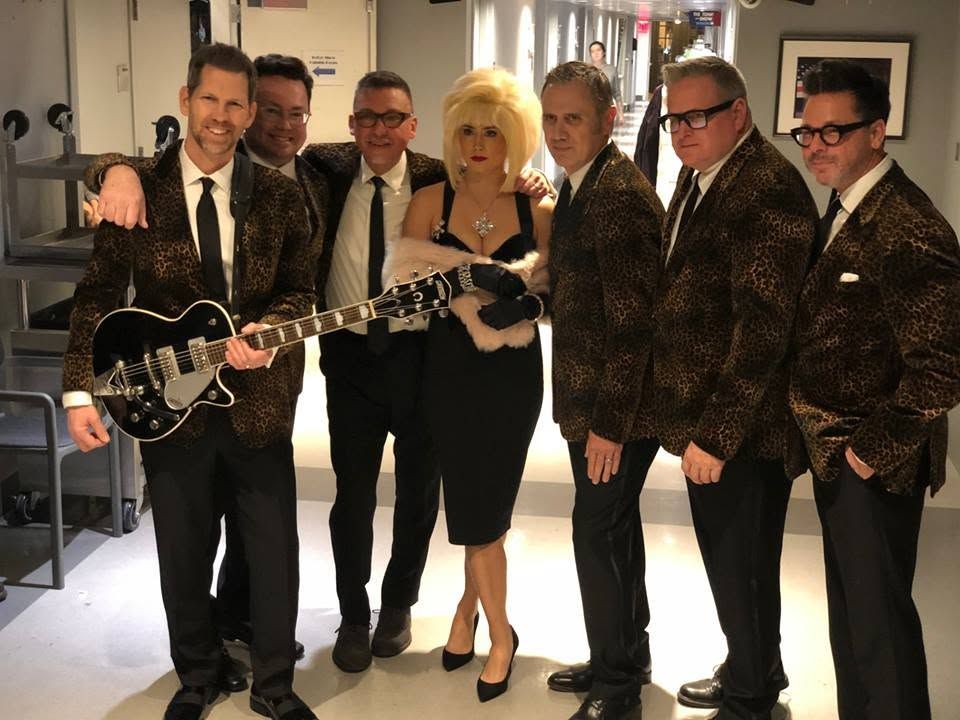
Ben: Yeah, it’s nice that people have stuck by us all these years, and we have a lot of gratitude around the fact that people like Jimmy Fallon, to have us on The Tonight Show when we didn't even have anything to show … he’s just such a big fan, and he was like, I’d love to have you guys on.
That’s really nice, and a lot of our people have stuck by us all these years. I think it’s really cool.
Aside from music, I read you also have your own bourbon. How did that come to be?
Ben: We can put a shout out to our main patron, Walter Zausch. He has a boutique bourbon distillery called Whiskey Thief, and he is responsible for helping get us on the road occasionally, and putting out our record. He made a bourbon for us in honor of our new record, and it’s for sale on whiskeythief.com.
Jonathan: That’s also where you can buy the vinyl pressing of our album, as well as the bourbon.
Whatever it takes these days to get your music out. Some people put their music out through a major label, we’re putting ours out through a distillery, which is kind of a full circle moment for us being from Kentucky, and being so bourbon fueled, let’s say, as we were for many years, some of us a little less so these days than then, but I’m grateful for what bourbon did for us, and continues to do for us.
For more Love Jones, check out love-jones.com.
Comments