
Kelli Baker is Proving Dreams Do Not Have an Expiration Date
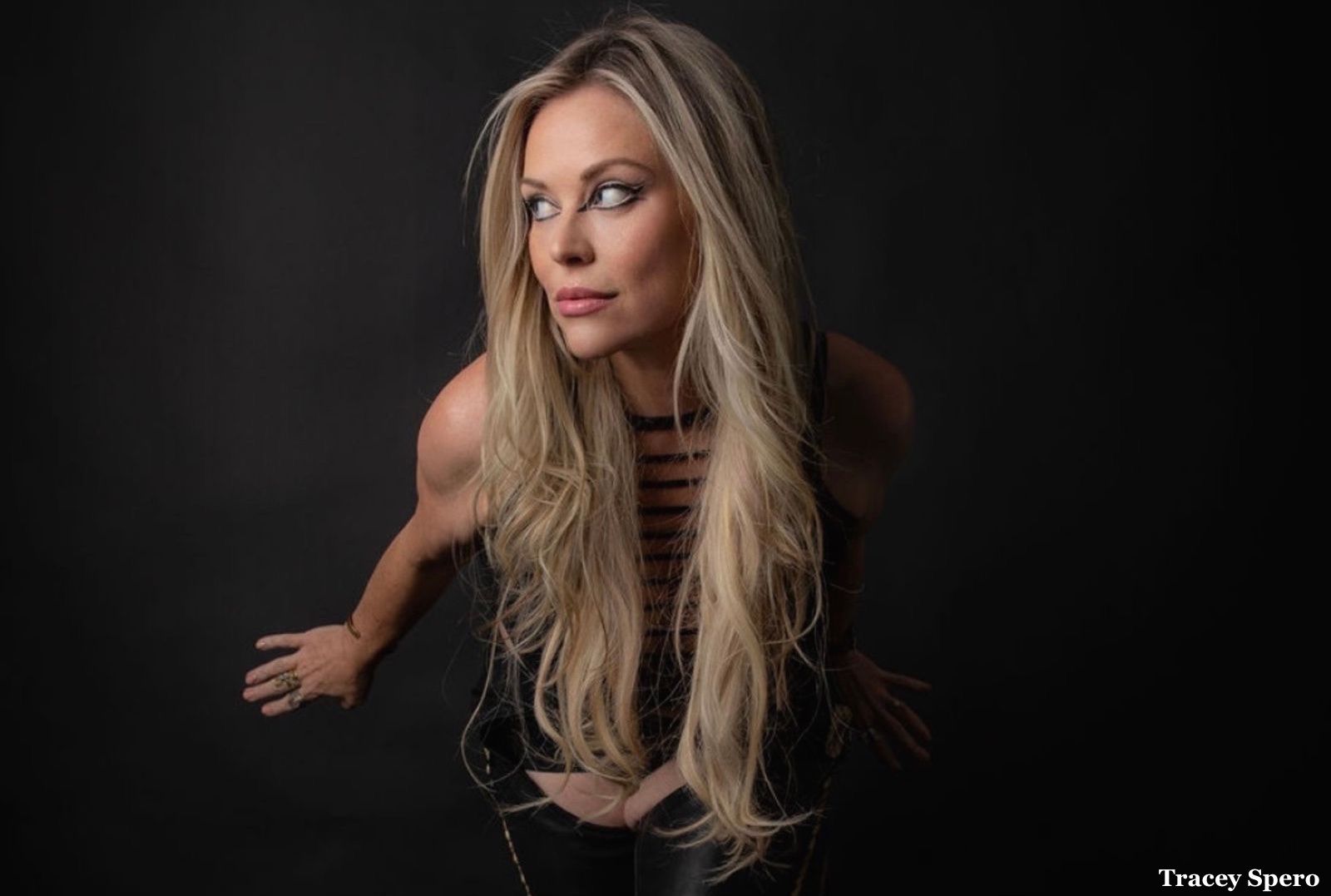
It’s said you need to walk a mile in someone’s shoes to understand what they’ve been through. When blues artist Kelli Baker looks out into her audience, she sees a lot of women in familiar footwear, and her goal is to let them know they are not alone.
“As women age,” she explains, “there’s so many women that just feel unseen, and like they don’t matter, and when I see them at the show, sometimes they’re not sure what my energy is going to be until we can sit and connect with each other. I want to bring something out in those people that makes them feel, and makes them feel like they could do something.”
Baker continued, “I want to create peace with my audience. It’s so tumultuous, and there’s so much hurt, I want to create moments where people are actually sitting and feeling and touching into who they are.”
For Baker, her moments with music began as a child, growing up in Phoenix, AZ, with her father’s love of B.B. King, and the Rolling Stones, and her mother’s love of Bonnie Raitt.
Baker, always a singer, was a member of her church choir, but the path from the church to the stages she’s currently performing on proved to be a tumultuous one.
From being a teen mom, and putting her career on hold to raise her daughter, to arriving in NYC just as Hurricane Sandy was hitting, Baker navigated through a heck of lot to finally have her music front and center, and now that it is, she’s proving dreams do not have an expiration date.
I caught up with Baker to find out more about her, and her music, including a very awkward on stage moment she had with a member of Gin Blossoms, and how she wound up opening for the Insane Clown Posse. She also discussed her upcoming full-length album, which has been a lifetime in the making.
I think the first thing people notice about you is your vocal prowess. At what point did you realize you had a big voice?
Actually, that’s something that came with time, just like developing a muscle, and I’m a much different singer than I was even six or seven years ago.
One big thing for me was, I had to go to Christian schools, my parents put me there, and there was a girl that came over from Nashville, and she was auditioning for this singing group I was in called The Chorale. She sang this version of “Precious Lord Take My Hand” in a way that I had never been exposed to. I don’t think I’ll forget it for the rest of my life. I was like – how does she do that with her voice? How can she sing with that kind of energy?
That’s when I started to change how I presented myself musically.
You’re originally from Phoenix, and I read you moved to New York City during Hurricane Sandy.
We got here just as it was hitting. Yeah.
Has timing always been your strong suit?
{laughs}
Timing always makes sure that I’m on my toes, we’ll put it that way.
Things tend to happen.
When I came across to New York, my aunt was living here, and I asked, “Should you be worried about this hurricane?” and she said, “No, they always lie about how big of a deal it’s going to be, and it’s never that big of a deal. Just come.”
I was driving across the country. I’d already sold everything that I owned. My truck blew its engine. I got robbed on the way. When I finally showed up on her doorstep, the hurricane had hit just a day before. We were without power for 13 days, which was very easy compared to how many other people had it, but it was an interesting welcome.
You disappeared from the stage for a decade after a bad open mic experience. Why was one bad experience so jarring, and what eventually brought you back?
It’s very funny because that was in Arizona, and I could always sing, but there was something about playing a guitar that was very intimidating to me, and that was my first time playing the guitar in front of an audience on my own.
The guy running the open mic was Scotty (Johnson) of the Gin Blossoms.
I just had no idea what it was like, how you would be waiting for forever. I got a little tipsy, and then I bombed so badly. I was absolutely mortified. He came up and took my guitar.
I thought, oh my God, I could never. I was just so humiliated. I said, I’ll never be able to play the guitar in front of people.
Years later, my friend Catherine, who I was working with at the time, her dad came to visit from Australia, and he played music all his life, and produced, and he said, “I’m going to go to this open mic, and you’re going to come with me.” I said OK, because I think that was just it, just having somebody drag me out. I was playing in my living room, and making little YouTube videos, and I went.
It wasn’t as bad as the previous time, but it wasn’t great. I still got through it, but the difference was the guy hosting it said, “You know what? You’re good. You should come back.”
That’s all it took.
I was back the next week, and then I would start going to other ones. I was going all the time, honing my skills, and then I transitioned to moving to jams, and playing with other musicians.
It was a pretty crazy timeline of how fast it went after that.
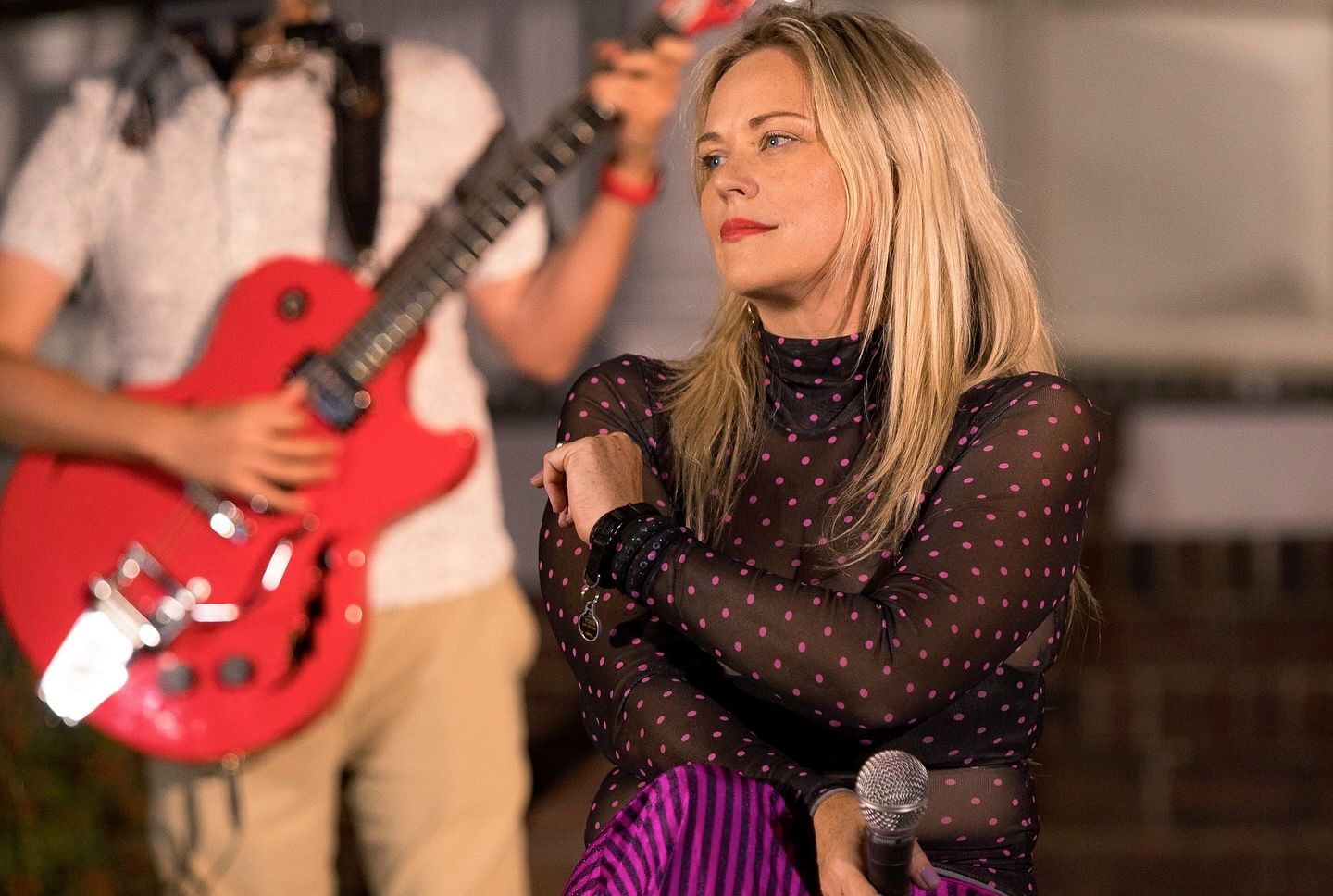
You mentioned Scotty from the Gin Blossoms took your guitar.
Yeah, because I couldn’t play the chords because I was so terrified. I kept messing up.
Like literally, you were in the middle of performing, and he was like – nah? Yeah, that’s a pretty bad experience.
You’re like, oh, OK, it makes sense now.
Yeah. It’s really understandable now. When someone who’s known is just like – oh, I’m sorry, but no.
He was like, let me help you. I’ll play this song for you.
That’s how bad it was.
But at that open mic you technically did a duet with a member of Gin Blossoms, right?
This is true. This is true.
So not all bad. Now, I have to ask about this because I read that you opened for ZZ Top, and ICP. Are we talking about the same ICP? Did you perform for a crowd of Juggalos?
I did. That was at the Sturgis Motorcycle Rally last summer.
They have some really good bands there, and I have a friend that books it. He saw us at the NAMM (National Association of Music Merchants) show, and he asked us to come out and play.
We were there all week on different stages, and then they put us on this giant stage, I think two days before Disturbed did that stage. We were supposed to be up earlier in the day, but something happened. They asked if we could do a 90-minute set. I said, yeah. So we opened up for ICP. A 90-minute set of blues, and blues rock before ICP, which is totally different, but they were really nice.
Juggalos have been known to throw things at acts they don’t like. Did you have to dodge anything?
I went out before the show, and I got to hang out with everybody that was in the pit, and meet them all before we started. They were actually really cool. I think at the Gathering of the Juggalos, that’s where they’re more known for it.
But they had big pallets of the soda that they use to spray the crowd (Faygo).
I have to say they were really cool for something so unexpected, and it was a really awesome experience.
Did you get a chance to spend any time with ICP, or ZZ Top when you opened for them, and tap them for some knowledge?
ICP said they had just recently had a big resurgence off of TikTok. They were so respectful and cool. Their crew was very, very cool.
We didn’t talk to them too much, but we got to see the whole operation, and how they build everything up. It was just awesome. The same thing with ZZ Top, seeing how they do these things at a high level, bringing up the stage, taking things down, and everything like that.
Then we watched the show, which was super cool.
It was a blast.
Moving to the present, what are you working on right now?
We just recorded my debut full-length album.
I’ve recorded so many things, EPs, and all that stuff, but this is the big deal. It’s called Mother, and I’m going to record the final vocals at the end of this month.
The producer is Zach Allen. He won the Grammy for Kingfish Ingram’s 662 for contemporary blues album a couple of years ago, and for Taj Mahal and Keb Mo’s album TajMo.
We recorded it down at Ocean Way in Nashville, which is this beautiful studio, and I’m very, very excited about it.
Do you have a release date, or release season for it?
It should be this summer.
After all the open mic drama all those years ago, you’ve become known for your live performances. How much of the live version of you are we going to hear on the album?
There’s all kinds of different aspects in it.
You get that big, powerful voice that I can come with, but you also get the softer side of it.
The musicians that I work with, and the producer that I’m working with, are of such a high caliber, the musicianship behind it is so well done, and that’s what really makes the live show great. Then the way that I connect with the audience, which is reciprocal. It does just as much for me as I hope it does for them.
That’s what my whole goal is with music, to connect with people, not to put myself on a pedestal, or anything like that.
There’s a song called “Bad Mother,” and it came to me as I was leaving a show in Evansville, Indiana, and I was at the hotel. It’s about how for women, everybody has fears about being a bad mother, or an inadequate mother, whether it be to your children, or to other people in your life, because no matter what, in society, we have that aspect where we are mothering people, and mothering figures, and it carries a lot of guilt, but there’s also so much power in that. So it pulls on both of those things, and I’m really excited for that track.
I don’t know how much you want to talk about this, but when we were emailing back and forth, and I mentioned the recent passing of my father, you said the passing of your father had a huge impact on the trajectory of your life. What are you comfortable sharing about that?
Oh, I could talk about him forever.
When I was saying that I wanted to go to New York, and do all these things, I had my dad, and I had my mom in my corner encouraging me, almost to the point of delusion, especially my father, “You can do anything.” All of these different ridiculous things, these harebrained ideas, and he would just go along for the ride. He was such a special, special human.
I feel that I got loved enough in that time, he passed away in 2015, to carry me through my whole life. Like I was fortunate enough to be loved by him in that impactful, tight amount of time that it’s going to carry me until I’m 90.
Had it not been for my father and my mother, I don’t think I would have that belief that I could do these things that everybody tells me that I shouldn’t be doing – going back into music when I’m not 20 years old. Who says I could do something like that? My dad said I could do something like that.
My last EP that I released was called Granite, and I put a track on there called “The Call.” That’s a voicemail that my father had left me.
I had been in New York for a couple of years. I was really struggling. I was a young mom, I was working at a restaurant, and it had a fire, and burned down. I was so broke, and I was just sobbing, and he called me, and he left me this voicemail.
The cover of the EP is a painting that hung behind his kitchen table. Just going back to the roots with my father, and them pushing me.
But that was a great thing about my dad, how supportive he was. When he died, I don’t think I was right for a couple of years, but he’s with me every day, and I can’t believe that this part of my life has transpired since he died. He never got to see this happen, which to me, it’s hard for me to wrap my brain around.
I could talk about my dad forever.
For more Kelli Baker, check out kellibaker.com.
Comments