
Greg Raposo and Matt Ballinger – Keeping The Dream (Street) Alive
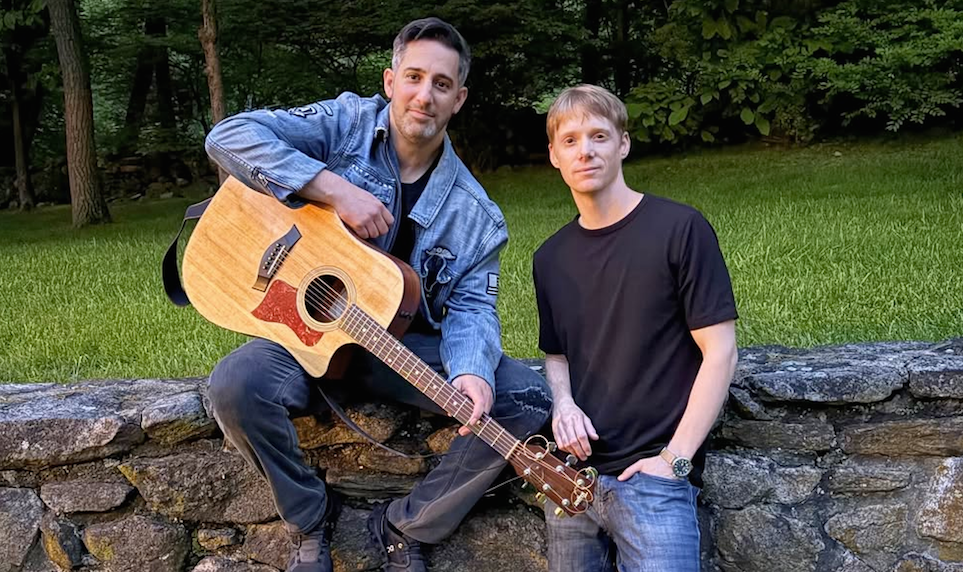
Greg Raposo now has some gray in his beard, and both he and bandmate Matt Ballinger are married with kids, but there was a time at the turn of the century when they were kids, and they were two-fifths of Dream Street, one of the last vestiges of the TRL boy band era.
The group, which consisted of Greg, and Matt, along with Jesse McCartney, Chris Trousdale, and Frankie Galasso, was short lived, only lasting from 1999 to 2002 before breaking up. Recently, however, fans have seen the name Dream Street appear on venue bills alongside other pop nostalgia acts like BBMak, LFO, and O-Town.
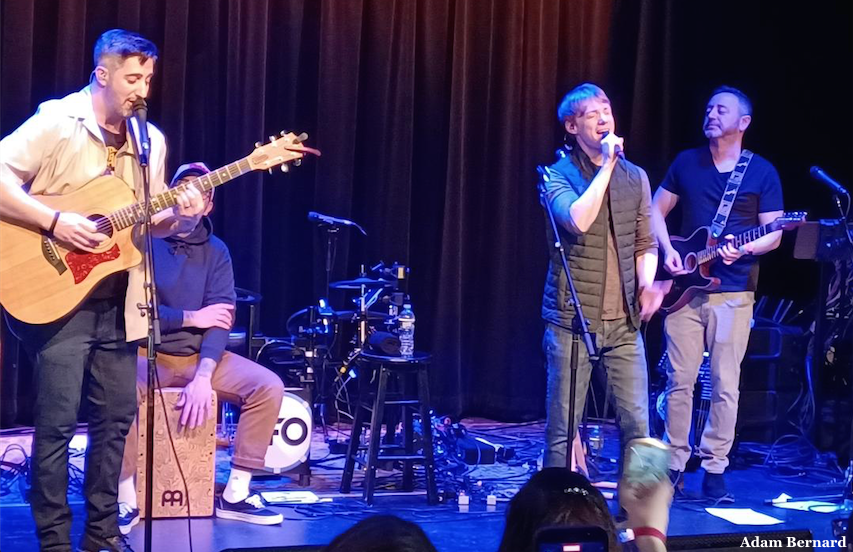
The lineup is now Greg and Matt, accompanied by a guitarist, and a drummer, and the duo’s voices sound a bit different due to being adults now, but according to Greg, the vibe is nothing short of special.
“There are moments on stage where I could close my eyes, and feel like I am 14 again,” he says, sitting backstage next to Matt before a recent show, “I think that really is part of the magic of what we’re doing. I mean, numerous times I’ve gotten chills just being on stage, just standing up there with this guy. We have a natural chemistry just from growing up together, and I think that also translates with the fans. There’s a chemistry in the room between everybody, and it’s just awesome. It really is so much fun.”
I caught up with Greg and Matt to find out what inspired them to bring back the music of Dream Street, why they credit Maury Povich as a major reason for the group’s initial success, and how the passing of bandmate Chris Trousdale has changed the way they view life.
You’ve each had lengthly post-Dream Street careers, so what made you want to revisit this part of your life?
Greg: It was my 40th birthday. I do a birthday show every year for a charity, and because it was this milestone birthday I asked that if (Matt) would join us. He also plays with his band (Storeys).
They joined us on the bill, and I’m like, dude, we’re both here, we’re not going to be sober, so we should just, you know, run it back, and do a couple of songs.
Matt: I was like, sure, like, why not? You know, what do you have to lose? Let’s just have fun. I felt like people would like it, so it was really just for fun.
Next thing you know, Pop2K booker’s like, “Hey, do you want to open up for BBMak?” and we’re like, “Alright, why not?”
That’s kind of how it all started.
Greg: It’s basically just been a series of yeses, and opportunities that have come to us, and we’re both fortunate that we have the flexibility to be able to do it, and we’ve just been having a blast.
Matt: I think also when we started revisiting the songs, and we started breaking them down to our voices, I think we actually really enjoyed the music. I don’t think we realized we liked the music as much until we actually started playing them together, singing them together, getting a feel for the harmonies, and what the songs were about. So I think there’s a new appreciation, and a new chapter to this whole experience for us. I think that’s what’s driven this forward, as well as we’re actually genuinely having fun with the music.
You mentioned you had to make some vocal changes to the songs. Were there any other alterations that needed to be made, or maybe a song or two where you were like, “You know what, we can’t do that at 40”?
Greg: We haven’t said no to anything, but we’ve definitely made them our own.
There’s only two of us, so we’re singing them as more of a duet than a group of five. Naturally, it’s like – you take this verse, I take this verse. You do the harmony here, or I’ll do the harmony here.
Matt: Yeah, the vibes change, too. When you’re doing songs with octaves much lower than they originally were, they feel different, you sing it a little different.
We’ve gotten a lot of feedback from fans being like, wow, like, it sounds almost contemporary. People are like, “I can’t believe that was bubblegum pop.”
I don’t feel like it sounds like bubblegum pop. Maybe the lyrics are, but again, it does have a different vibe and connotation, especially when you’re at this stage, and what we’re doing right now, it’s super organic.
Greg: It’s just me on an acoustic guitar. We have my buddy Ed on a guitar, and our other our other buddy Ed on a box drum. We’re not playing to tracks. We don’t have smoke and mirrors by any means. It’s just a very raw thing right now, but it’s fun. I feel like it gives us a little bit of a sense of it feeling like it really is us.
Have you found that going down a few octaves has changed the meaning of any of the songs? I remember hearing A-ha do a slowed down version of “Take On Me,” and it suddenly became a beautiful song about aging. Has anything like that happened with your songs?
Greg: I’d say more so like – damn, we were singing that at 14?
When we were 14 we weren’t thinking about what we were singing, so I think it’s been more like, what is this song actually about?
Matt: I think a lot of the songs are even more relevant, like the lyrics make more sense than when we were 14, so it’s almost the opposite of that.
I know the band didn’t end happily, there was a big lawsuit, with your parents saying that you were exposed to things you shouldn’t have seen at that age. As adults looking back on that time, do you feel you were properly protected by the people who were in charge, or do you feel like, man, we were seeing stuff we shouldn’t have seen?
Matt: It was such a blip during that time.
I honestly feel like what really was happening was there was so much disagreement, and there was so much friction between the two sides, that ultimately things just exploded.
I just think it was a bad situation in the end, and unfortunately, that’s what was the demise of the band, no one could figure out how to get along.
And the reality is we were kids, so it wasn’t about us getting along with people, it was (about) our parents getting along with everybody else.
Your former producer, Brian Lukow, still owns your masters. Is there any talk of attempting to get them back from him?
Greg: Not really, because those are masters of us singing prepubescently, so they’re not relevant to what we’re doing now. I mean, if anything, we’ve talked about rerecording some of the music in the way we do it now.
Matt: Yeah, like a different vibe.
There were five of us in that band, it wasn’t just two, so I think we’re respectful to that.
You lost one of those five in 2020 to COVID. How did Chris Trousdale’s passing change the way you either view life, or live life?
Greg: It changed a lot, honestly.
Matt: It brought us all closer together, the whole Dream Street family.
Greg: Yeah, we didn’t do the best job of staying in touch. We were all kind of living in our own worlds, and then when that happened, I think it really shook all of us.
I had the intention of recording “It Happens Every Time” acoustically to honor him. I had messaged the guys like, “Listen, this is something that I want to do,” not expecting anybody necessarily to join me, and each one of them was like, “What can I do? Let me know, I’m in.”
That alone was really powerful, how almost without even having a conversation we just came together and recorded this song, which came out beautifully, and was a really powerful.
Matt: Yeah, and I think to your point, when someone that young, that you’re so close to, and have such a relationship and experience with, passes away, how do you live your life?
You appreciate the things that you may have not appreciated.
It’s like, wow, it was a really special time in our lives.
We never got together, the five of us again.
I think that makes you think about life in general, like the people that you care about, and the people that you want to see. It's like, time is ticking, and you got to appreciate it.
Now, with Dream Street, we do try to make an effort to get together more. Like there is a real sense of like experience, and friendship.
On a much lighter note, you appeared on Maury back in the day, so I have to ask – how’d the paternity test go?
Both: {laughs}
Greg: I’ve credited Maury as our like overnight success, because up to that point we were doing mall tours, and doing random shows here and there. We had the WWE concert after Maury, and there was a line down the block outside.
Almost everything we did post-Maury was completely sold out.
Did you say WWE?
Matt: It was a theater called WWE (WWF New York). It was like a place in Times Square.
Oh, the restaurant.
Matt: Yeah, and they had a venue downstairs.
One of your band members was Jesse McCartney. Did you guys have any inkling that he was going to go on to have the type of solo success that he had?
Matt: I mean, we all feel like everyone was super talented, so if anyone exploded, I don’t think it was that shocking.
I do remember him playing his single to me, “Beautiful Soul,” in my like cul-de-sac, and being like, damn, that is a good song.
I feel like if I remember that, then I guess I’m not totally surprised.
As Dream Street, is there an album, or an EP, in the works, or are you focusing on live shows for now, while also working on your other projects?
Greg: We have been writing new music. We have a new song that we’ve been in the studio recording, and we’re pretty excited about it.
But also, we also feel it’s very important not to forget our roots. People who are coming to see Dream Street, they want to hear Dream Street, right? So I think it’s a mix of us writing, and maybe having some new material together, but then also performing the hits, and the classics, but reimagining them.
We’ve also discussed going into a studio and re-recording them, you know, reimagined.
Something I noticed when I saw you open for Brad Fischetti of LFO, and Trevor Penick of O-Town, is that your fan base creates a really fun vibe, because they’re all there to have a good time.
Greg: Yeah, we all are.
I think we’ve all grown up together, so when we hire that babysitter so that we can all have that parents night out together, it’s like everyone’s got the assignment, and that goes for us, as well. You know, these are special occasions.
So, yes, if you're coming to a Dream Street show, you’re coming for a good time, and we will be bringing it.
Matt: And we’re getting a lot of feedback, like – “(We’re) so happy you guys are doing this. I can’t believe this has been 20 years. We love it.”
That gives us fuel. Hearing this 20 years later, like, wow, people want to come see us. I think that’s why we’re like, well, I guess we’re just gonna keep doing it until they don’t want to see us anymore.
For more Dream Street check out their Linktree.
Comments