
David Kincaid – From Performing at CBGB, to Unearthing Lost Songs of the Civil War
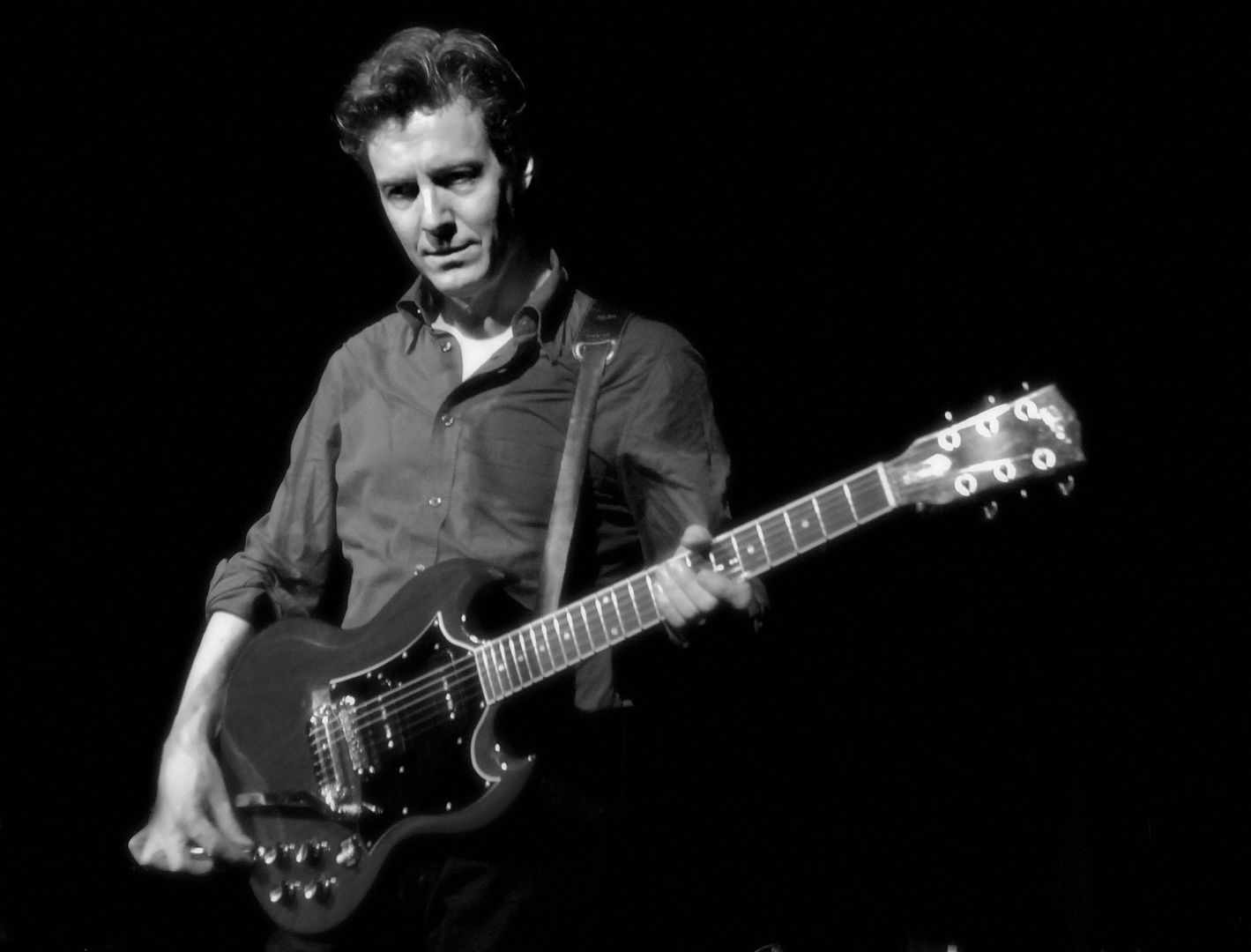
Certain co-signs are indications of being NYC music royalty, and in the ‘80s David Kincaid’s band The Brandos earned quite a few, most notably from the staff, and ownership at famed venues like The Bitter End, and CBGB.
Kincaid recalls being floored by a compliment at The Bitter End, remembering, “Some of the waitresses, who were so jaded at the time, at our last couple of gigs said, ‘Hey, you know, you’re our favorite band here.’ I went, ‘Really? Wow!’”
He was similarly taken aback when he discovered how liked the band was at CBGB.
“(CBGB owner) Hilly Kristal, nice guy, very quiet, just kind of reserved, you know, he’d seen it all, but I learned later, he liked us. He thought, oh, those guys are actually doing something cool.”
New York notoriety led to a record contract, but Kincaid’s story actually began in Seattle, fronting a band named The Allies, before heading to NYC and forming The Brandos. The Brandos would find their way onto MTV with a historically accurate song titled “Gettysburg,” and tour with with a veritable who’s who of the mainstream rock scene at the time, although sometimes much to the chagrin of the band (more on that later).
While some rock bands try their best to maintain the spotlight, after discovering a family Civil War connection, and striking up a friendship with a radio programmer who was a Civil War reenactor, Kincaid’s musical ambitions found him drawn to the much dimmer lights of various major libraries. His research, and many of his recordings since then, have given new life to Irish-American songs of the Civil War thought to be lost well over a century ago.
I caught up with Kincaid to find out about his wildly unique music path that began in the Pacific northwest, moved through the famed rock stages of NYC, and now sees him as a preserver of Irish-American musical history.
Going all the way back to your origin, you were in Seattle before moving to New York City. Before you left Seattle, did you have any inkling that grunge was on the way? What was the scene in the city like when you left?
Oh, there was no indication of that.
I was in this club scene that was actually very cool in the early ‘80s. It was kind of post-punk, new wave, but cooler.
There was a band called The Heats that were kind of Ramones meet Beatles, and The Cowboys was another one that had this kind of ska punk thing going, and there was us, The Allies.
By the time I left, we were at the top of that set. A lot of people thought I was nuts to leave, because we had a local hit song called “Emma Peel.” It was on the air in Seattle for ten years. It still comes on once in a while, apparently.
We played six nights a week in the club scene full time. I did that for a good ten years, really. So we were doing very well, but nobody, by the time I left in ’85, could foresee (grunge).
It was funny because promoters in Europe, after the grunge explosion, tried to promote The Brandos as a Seattle thing. Before that, they promoted us from New York City, because that was a big deal in Europe.
This one Dutch promoter tried to latch onto the Seattle thing for a little while, and we said, hey, you got to stop this.
Yeah, because people are going to come for one sound, and get something totally opposite.
Yeah, we’re not part of that, and don’t pretend to be. Plus, I don’t live there.
I’m way more in tune with the New York scene.
When I came here, I came because of The De-Lords, and The Smithereens, and things like that. I mean, I heard The De-Lords on the radio in Seattle in like ’83, ’84. They had a song called “Get Tough.” I heard that single on this really cool underground station, and (I said) that’s a scene I want to be part of.
And you became part of the scene very quickly after moving to New York.
It’s never as quick as it looks. We started playing gigs in early ’86.
You got to do The Bitter End, and Kenny’s Castaways. There was a place called The Dive in Chelsea. We did CBGB a bunch.
You couldn’t play like we did (in Seattle), six nights a week. In a major city, you can’t do that, but there’s a plus to that, because when you do play, you put everything you have into it. You can’t get complacent.
The ‘80s were a heck of a time to have some notoriety. After you signed your record deal, what kind of doors unexpectedly opened for you?
It was very strange.
You really see how strange the music business is.
We got the record deal towards at the beginning of ’87, because we’d been making the album on our own, and then we went out and shopped it. I was vigorously shopping it to these independents.
(We shopped it to) the label that The Smithereens album had come out on, and some of the other ones, and I went to Relativity, because that was the kind of career we wanted. We looked to people like R.E.M., we admired the way they were doing things.
They came up through underground clubs, and then ended up doing a lot of universities and colleges where they got this very cool crowd that understood what they were doing, and understood that they were different in a good way. So they let it build until they became known globally.
We looked at that and went – that’s the model of the way we want to go.
We did the deal (with Relativity), and I think we finished our album in May, but they said it’s not gonna come out until September, which we didn’t like, but they said – you have to set up the promotion, the lead time, the press. They were setting up to take out all the ads, and put everything behind us. The other acts on their roster were kind of pissed off at us.
We did the New Music Seminar. They had venues all around the city, and people would go around, and they had laminate passes to get into the gigs. It was kind of like South by Southwest.
Right after that every major record company called me. My phone wouldn’t stop ringing. MCA records, Capitol Records, CBS, this, that, the other, and I just went, “We’re already signed. I’m missing the point here.”
I just looked at the industry, and I don’t get this, we were signed. You’re not going to change that right now. We’re not going to like jump ship. Plus, we signed a contract, you can’t just leave it.
You’re not going to break the deal you just signed, especially with the album ready to be released.
No.
Then we took on management, this guy, Mark Spector, who I wasn’t thrilled with, but he seemed to be a very business guy, and I thought, oh, we need that.
He was a mistake because he did not understand the kind of career we wanted. He wanted to put us out in the Midwest on a tour with REO Speedwagon.
That’s not you at all.
No. Back then the lines were drawn between what we were, and what we considered just corporate schlock, so we locked horns right away, me and this manager. It’s like, no, we don’t want that. You’ve got to find something better for us.
We ended up going out with the Georgia Satellites for a short tour, who had just had a huge hit the year before, with “Keep Your Hands to Yourself.”
It’s amazing how fast you can go up and down. I mean, that song was in every grocery store, and elevator, and hotel. You couldn’t escape that song for a while. We did a tour with them a year later, and they’re doing small clubs.
We ended up going out with INXS, which is ridiculous, too.
It’s not like you can just throw a band out in front of any rock and roll crowd. The INXS crowd was 16 year old girls who wanted to dance, dance, dance. They were literally standing on on their seats in these auditoriums, and dancing their asses off. It wasn't really a rock and roll crowd at all.
Then we got on with The Cars. It was their very last tour. There were big venues, big crowds, big houses, and we got up there and tore it up, and had a great response from their crowd, better than the INXS crowd.
It was just a weird thing with that manager, and as soon as we got that manager, he started going, “We got to get you off this label.” I was like, why, they’re doing all the right things. “No, no, no. We got to get bigger. We need more backing.”
We really mulled that over, and I eventually acquiesced reluctantly.
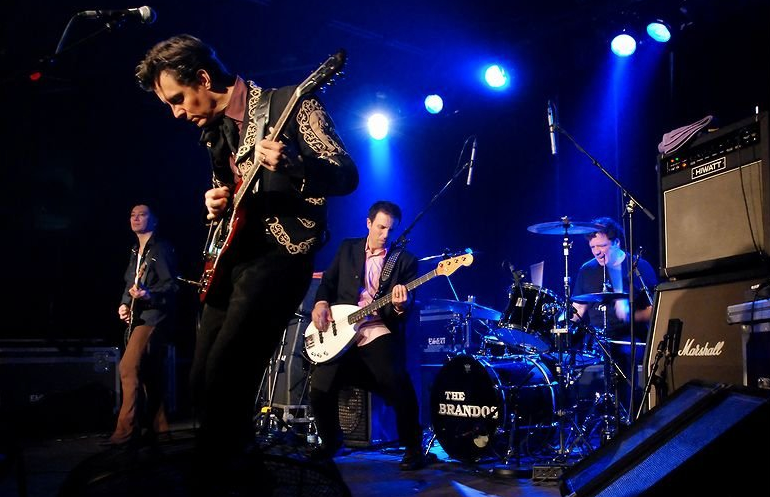
When it was over, I realized this was so the manager could get a big percentage of a big advance. It was for him. It screwed us. It delayed everything. It put us under tremendous financial pressure on our second album. There was this massive money that we owed the record company for all this advance money had been paid out.
So go back to your earlier question, what was it like with the business? You can't exaggerate the chaos and craziness of the music business, and what can happen to you, and how, in the feeding frenzy.
Three of the bands you toured with, two of which you mentioned INXS, and The Cars, and you also toured with The Alarm, all their lead singers have passed away. Did any one of those passings hit you harder than the others?
Michael Hutchence was a nice guy. He was a decent guy. We hung out a bit after gigs and talked and joked around, but I didn't quite relate to his scene, so we never got close. We were much closer to Ric Ocasek and his wife at the time, Paulina (Porizkova), who was a big deal model. We got to meet them, and hang out with them for a couple of weeks.
We saw him again later in New York, because they lived in the city, too. We’d run into them once in a while, so Rick’s passing, I thought, oh, that’s a sad one.
He was great. He was a great writer. He was a nice guy.
You received airplay on MTV with a historically accurate song about Gettysburg, and you’ve continued to write and perform songs about history, specifically the Irish involvement in the U.S. Civil War. How did you land on that as a passion?
The historical end has always been there for me. I mean, I didn’t write songs about it before “Gettysburg,” but when I left Seattle, I left with this concept of a band, and also just a few years before I found out that my great great grandfather fought at Gettysburg in the union army.
He was from Pittsburgh, PA, and fought with one of the toughest Yankee regiments out there, started by Colonel Alexander Hayes.
He’d been sort of lost in family history, and I was just stunned, and amazed.
When I came from Seattle, and I’d started writing some of the songs that were on the first Brandos album, songs like “A Matter of Survival,” and a couple other things, it had this more rootsy Americana feel to it. The Allies was more of this British power pop, new wave kind of thing. So this was a real shift, but I’d been going in that direction months before I actually moved out, and I was going back to my initial roots were Creedence Clearwater Revival.
I was the biggest Creedence freak ever. Those are the first albums I played. That’s the ultimate roots rock. (John) Fogarty infused hardcore R&B and soul and blues into this rock thing, and historical thing. I was totally a fan of that.
I’m a total fan of The Who, too. The Who in their late ‘60s incarnation, were big and heavy, but the songwriting was brilliant, and the vocals were brilliant.
So my thing was Creedence meets The Who, Americana meets kind of a heavier British influence, and that’s what The Brandos became.
That’s still the foundation of what The Brandos is to me, and I’ve written a bunch more stuff, like I wrote a song about the Triangle Shirtwaist Factory fire that happened here in The Village in 1911. That came out on a later Brandos album.
After our first album, everything else is just in Europe. I released a bunch of those albums for streaming and download back in 2019, but I’ve stuck with that historical thing.
You mentioned the Irish songs, Civil War, I didn’t write those.
Where did those come from?
Out with The Brandos in ’87, ’88 touring, we ended up in Wisconsin, and this local DJ / radio programmer in Green Bay kept calling the record company for a couple months, saying, “I got to meet this guy.”
He’s a DJ / programmer, but he’s also a civil war reenactor.
I went up there, and had lunch with him while we were on tour.
The short version of this is he was actually from Pittsburgh, and I went, that’s where my great-grandfather was from. He said – we reenact it, we portray a (battle) from the Irish Brigade.
Well, we are Irish-American, so I went, this is getting interesting, and he said, we’d like you to come out with us.
I went, really? This is why you've been bugging me for months? But I went.
They were very serious, and historical. They knew the formations, how everything was done, camps, clothing, everything. I was very impressed with it.
I decided this is something I want to be part of, and I did it with them for many, many years, and people would be singing songs, and I went – where’s the Irish songs?
I was told, oh, you won’t find those. I said, no way. I mean, the Irish haven’t done anything throughout history without writing songs about it.
I started to dig them out, and did a lot of detective work and research. I ended up at the New York Library for the Performing Arts, and found a big cache of material, a couple hundred songs. I don’t have all of them by any means. They were punching these out. The broadside ballad tradition was like every week. They were like a musical newscast.
I initially started to record them just for the boys to listen to on the way to events, because we’d have a 12-hour drive to the middle of Virginia somewhere. Then as I started to put them together I realized this stuff’s never been recorded. I could do something real with this, like a real album release.
The songs really go into the whys, and the wherefores, of why these immigrants who were treated really badly, you know, “Irish need not apply,” that prejudice was very real and intense, and yet they still enlisted, and formed their own brigade. The Irish Brigade carried a green flag with a harp on it.
Since then I’ve had this double life going – I have The Brandos, and I have that.
I just spent the last two years doing another series of Irish Civil War (songs), and I’m getting back into The Brandos for another album.
I was about to ask which side of you is 2026 going to be dedicated to. It sounds like The Brandos.
Yeah.
I mean, it’s hard to shift gears back and forth, because it’s different requirements, and plus I don’t write those (Irish Civil War songs). I have to come up with arrangements, because you usually get a broadside ballad that’s just lyrics, and it’ll list a traditional melody.
See, the Irish recycle melodies. They’ve been doing that for a couple thousand years, so it will list a traditional melody, and I have to do an arrangement. Sometimes that’s as hard as writing a new song.
Now (for The Brandos), I have to sit down, and write, and play, and get back into playing this electric guitar. The Brandos is still an entity. It’s just me at the moment. I bring in whoever I need.
I have a son who’s 13 now, and it’s not so easy just to go on the road. 2018 was the last Brandos tour. I plan on doing something again soon, but first I have to record some material, and get that out.
And The Bitter End is still there.
I can think about that, right? I don’t know if I’ll end up there, but we’ll see what happens.
For more David Kincaid, check out his linktree.
Comments