
Digging Deep – Bruce Licher Dives Into Independent Project Records’ Well of Music
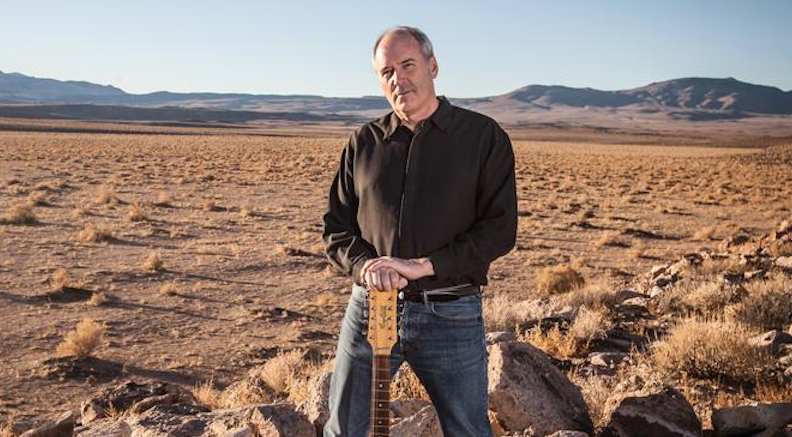
If Bruce Licher makes you a mixtape, it’s going to be damned impressive.
A few years ago the guitarist, and founder of Independent Project Records, made one that included so many rarities from old demos, he says he had to limit it to just himself, and close friends. “It would probably be impossible to get the rights to actually do it,” he explains, “because some of these demo tapes that I got in the late ‘80s, early ‘90s, I don’t have any contact info for them, they didn’t put it on their cassette tape. I just kept that particular tape because I really liked it.”
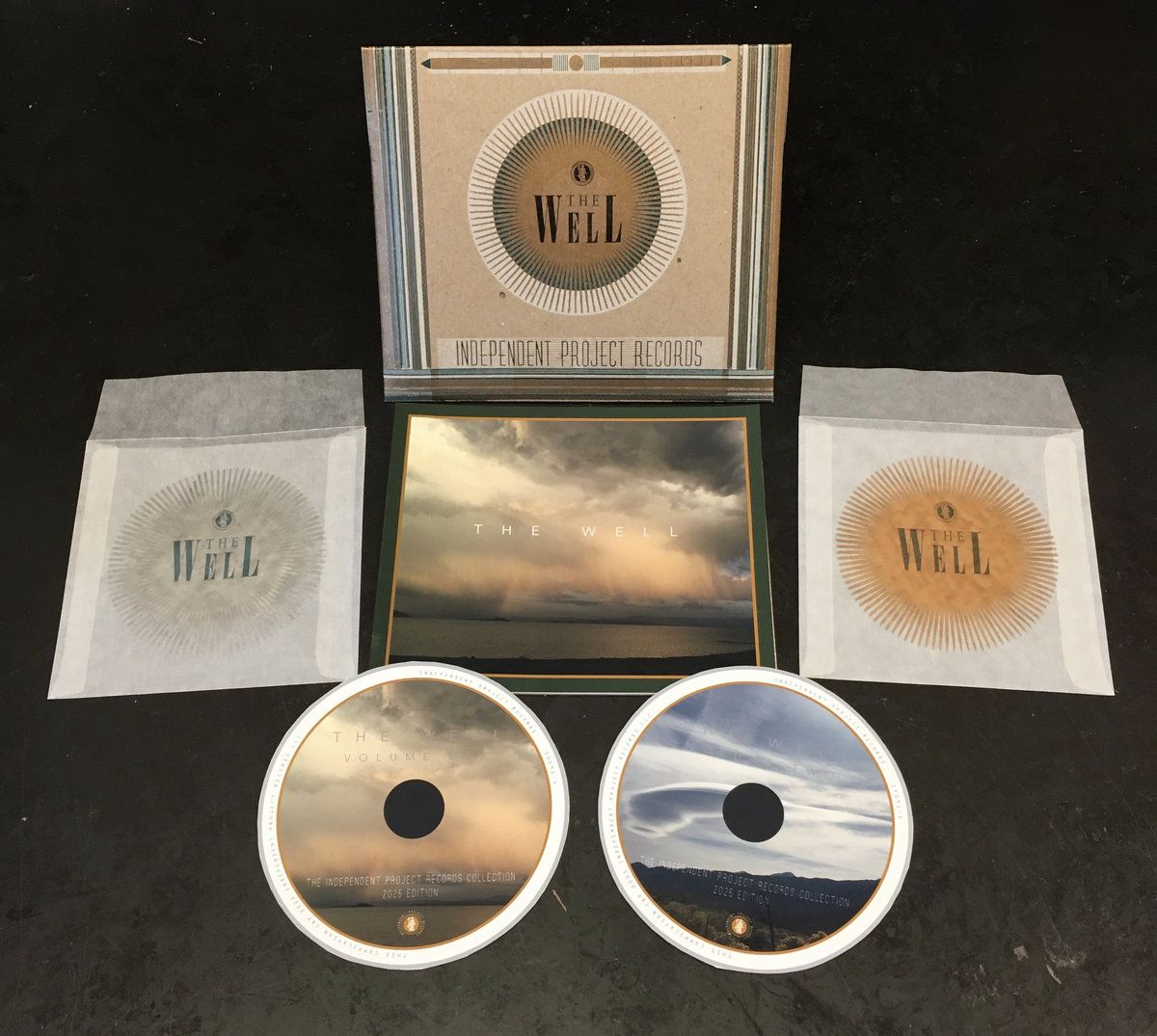
More recently, Licher created a mixtape that he could release, and that mixtape is the two-CD set titled The Well.
The Well came out last month, and is one part label retrospective, one part unearthing of lost tracks, featuring music spanning the entire 45 year history of Independent Project Records, and beyond.
Having everything from post-punk, to shoegaze, to experimental music, the songs were culled from old albums, previously unreleased material, and upcoming releases. It also features IPR’s standard of beautiful packaging and artwork, and has in-depth liner notes.
I caught up with Licher to find out more about his extensive dig to create The Well, as well as his love of album artwork, and the joy of old school DIY.
You have such a long history, but we’re going to start with your label’s latest release, The Well. What was the process of discovery for the lost tracks, and previously unreleased material on this compilation?
So the interesting thing is, like you said, I have a long history of doing this label, which started because I just wanted to make records of my own music that I was creating. Once I’d done that, I started seeing other groups that I really liked going to see in L.A., and that whole post-punk era, the early ‘80s, and some of them didn't have any records out, and it was like – I want one. I want a record of their music. So I approached them, and started working with other groups.
The more you put releases out into the world, the more other people who are creating music go – “Oh, I like what this label is doing. Maybe they’ll put my music out.”
So there was a whole period of time, especially in the late ‘80s, and ‘90s, where I was just getting inundated with demo tapes. Most of it wasn't anything I was interested in, but there were a few good things, and at the time I really didn't have the resources to be able to release everything that I wanted to do.
In a sense I still don’t have that, because part of the resources is time. How much time do you have, and how much time does it take to create a beautiful piece of work that people can enjoy?
And then to actually release it takes time.
Exactly. So there’s all of this music that I’m aware of, and a lot of it has never been released.
Some of these bands that sent me tapes years ago, like Spadra Moods, who are on this, two of people in that band joined bands that I was in. Thom Fuhrmann, the bass player, ended up joining Savage Republic, and then when I started the group Scenic, I liked what Brock Wirtz, the drummer was doing, and I asked him to be our first drummer in Scenic. But they had never officially released any of their music (as Spadra Moods). I mean, they made a cassette tape in the mid ‘80s, maybe made 50 copies of it to give to friends, or sell at gigs, or whatever, but there’s all this unknown music, and a lot of it, I think, is really good.
So it was a really nice opportunity to bring a few of those tracks forward, and say – Hey, look at this. This is something that should have been released at the time, but it wasn’t.
What initially struck me about The Well, even before the music, was the presentation of the album, because it’s gorgeous. Album art has always been a key component to what you do. With that in mind, I’m guessing you have some pretty strong thoughts on what streaming has done to the visual aspect of albums. What is the relevancy of an album cover in 2026, and how much does it depend on the audience?
I don’t personally listen to any streaming services. If I hear about a band that I’m curious about, I may check out a YouTube video, or Bandcamp page, just to listen and see if it’s something that I’m interested in, and if it is I will attempt to go buy the physical object, if the physical object exists.
I grew up listening to music on physical objects, and that’s what I still enjoy.
That’s my main interest in creating beautiful physical objects for the music that I love, and that I think people should know about. That’s, in a sense, and my partner (for the label), Jeffrey Clark, he feels the same way, this is what we’re all about, creating artistic product.
I mean, I hate to use that word (“product”), but it’s true, that’s what it is.
When I started the label, the idea was to create records as fine art. I was a fine art student at UCLA, and I was taking printmaking classes, and I just thought, rather than make a print that somebody would put on their wall, I loved going to the record stores, and flipping through the bins, and finding beautiful things that were surprising. I wanted to create fine art that people could find flipping through the bins in the record store.
I love it. Moving back to the music, give me one band on The Well that you feel deserves more credit for being influential either on their genre, or their scene.
One of the earliest bands that I worked with after I started the label was Kommunity FK. They were one of the bands that I was going to see play in the clubs. They were extremely inspirational to me. Their blend of punk, and psychedelia, and goth rock was so unique, and they were such a powerful band.
I had approached them to put out their first album, which we did, and it’s been out of print on vinyl for decades.
We’ve recently just reconnected with Patrick Mata from the band, and signed an agreement to reissue that album.
It’s interesting because I think he was very influential, but didn’t ever really get as much due as groups like Christian Death, and some of the other ones that were in part of that scene, that early goth punk scene.
He’s still out there. We just did a 45th anniversary show for the label in Los Angeles in November, and he got a band together, and performed both nights, and it was great.
It’s really nice to see him getting back out there again.
As a musician, and a label owner, you’ve lived through a plethora of changes in format. Whenever something new comes along, does it excite you, drive you insane, or a little bit of both?
I don’t get excited by new formats, let’s put it that way. As a matter of fact, when CDs first came out, I started a 10-inch vinyl series called The Archive Series, which was taking some of these archival tapes, and demo tapes that I was getting, and releasing them as part of a subscription series on 10-inch vinyl. Part of my marketing for that was sort of anti-CD.
Of course, now I’m at the point where I’m happy with CDs, they’re very useful. I like to listen to them while I drive my car, and I listen to them here in the office sometimes, too.
I recently bought a truck, I needed to update my vehicle, and I got a 2017. I think that’s one of the last years where they actually had CD players in the vehicle.
I don’t have a use for listening to music digitally other than, like I said, to check out things on YouTube, or Bandcamp just to see if I’m going to like something.
If you were just starting today as an indie artist, and you had your debut single ready, what would be the first thing you’d do in terms of launching your career?
I’d probably get a Bandcamp page, and put it up.
I mean, all I can do is think back to when I started, and it was just like, OK, I had friends that had bands, and they were making their 7-inch singles, and trying to get them on consignment at Tower Records on Sunset Boulevard. They actually had a really cool rack of local records there, and that’s what I did with my first record, Project 197. I went in there, and they said, “Yeah, we’ll take ten copies on consignment, put them on the rack.” I would come back a week later, and it’s like, oh, there’s only seven of them now. Great, people are buying this!
I love the way you said that – you brought in ten copies, you came back, and were happy seeing there were only seven left. So many people now feel like if they don’t have a million people streaming their music they’re a total failure.
Yeah, I can see that it’s a completely different landscape at this point.
When I first started making music with my friends, they were other friends at UCLA that were experimenting with music. There’s the track by Neef that’s on The Well, those were the first guys that I played music with, and we just got together to create because it was fun to create, and see what kind of strange sounds we could come up with, and put them together in these interesting ways.
We had friends who had this art punk band called The Urinals, and they had put out their own 7-inch, and we thought, oh, let’s do a 7-inch.
We’d been recording every time we got together, and we picked out what we thought would make a good 7-inch, and we found a record pressing plant nearby and we each put in $40, and we were just like, “OK, we have $200. Make us as many records as you can.”
I think we got 163 records back.
Eventually they sold out.
I feel like there’s so much more happiness in that way of doing things. So much of the joy has been taken out of this with streaming, and so many numbers being involved, because you smiled during every single part of that story – from the recording, to pooling the money, to finding out how many records you wound up with. Could something bring that joy back, or do you just have to be a specific type of person to have that joy?
That’s a good question. I think part of it has to do with just making something physical. The whole thing with streaming, it’s all on the screen, you don’t have that satisfaction of, “Look what we created,” you know?
We didn’t have the money to have a design printed on the label, so we carved a rubber eraser into a rubber stamp, and stamped the labels Side A, and Side B.
With The Urinals, one of the main guys was a film student, and I think it was on their third 7-inch he got a little strip of Super 8 film, and he taped it to the label with scotch tape, so you knew that was the side that had those songs on it.
How creative! So finally, what are your hopes for the year when it comes the label?
There’s archival things that Jeff (Clark) was involved with.
Jeff was the singer in the band Shiva Burlesque, and they’ve just started recording new material again.
So there’s new Shiva Burlesque, but also old Shiva Burlesque archival recordings. There’s a lot of stuff that they demoed back in the early days that never got released, so that’s always fun to go through, and see what there is.
For my own band, Scenic, there’s a couple of projects that we’ve been thinking about. There’s a very good live performance from around 2000 when we played in Las Vegas, the one time we played in Las Vegas. We have a really good quality recording, so that’s a possibility as a document of what what the band could do live.
Then there’s new bands. One of the things that we’re also trying to do is work with artists that are currently still creating music, like the band driveway ceiling, who are on The Well.
I’m not a huge fan of streaming, but I was listening to a band that I was interested in on YouTube, because there were some recordings that I hadn’t heard, and the record of it was out of print, very pricey. I thought, well, let’s just see if it’s worth trying to buy a copy.
It was playing on YouTube, and I got distracted, and when the song finished the YouTube algorithm switched into the next song, which was by this group driveway ceiling from Connecticut.
I’d never heard of them before. They don’t have any physical releases out, they just make their own music, and were releasing it digitally.
I was like, wow, this is really good, who’s this?
I started checking out other songs of theirs, and over time we started a correspondence.
Long story short, we’ve made an agreement to put their music out on vinyl and CD. They’re wanting to keep their digital distribution that they already have, and we’re okay with that. I mean, I am. Some of the other people at the label would would love to be able to work with the digital, but it’s OK. Again, my interest is creating beautiful objects of music that I think is really special.
The song by driveway ceiling that’s on The Well is from their album that we’re currently working on, and will be out later this year.
That’s awesome, and thank you for somehow bringing it all the way to my state at the end of the interview.
Yeah, exactly. {laughs}
For more Independent Promotion Recording, including where you can pick up The Well, check out independentprojectrecords.com, and find them on Bandcamp.
Comments